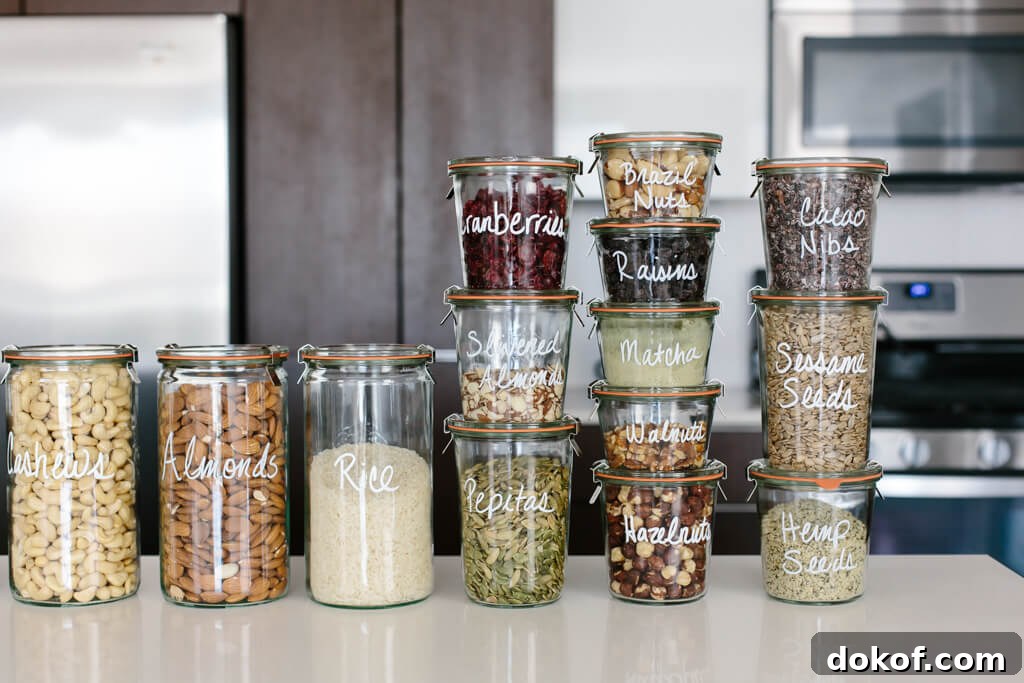
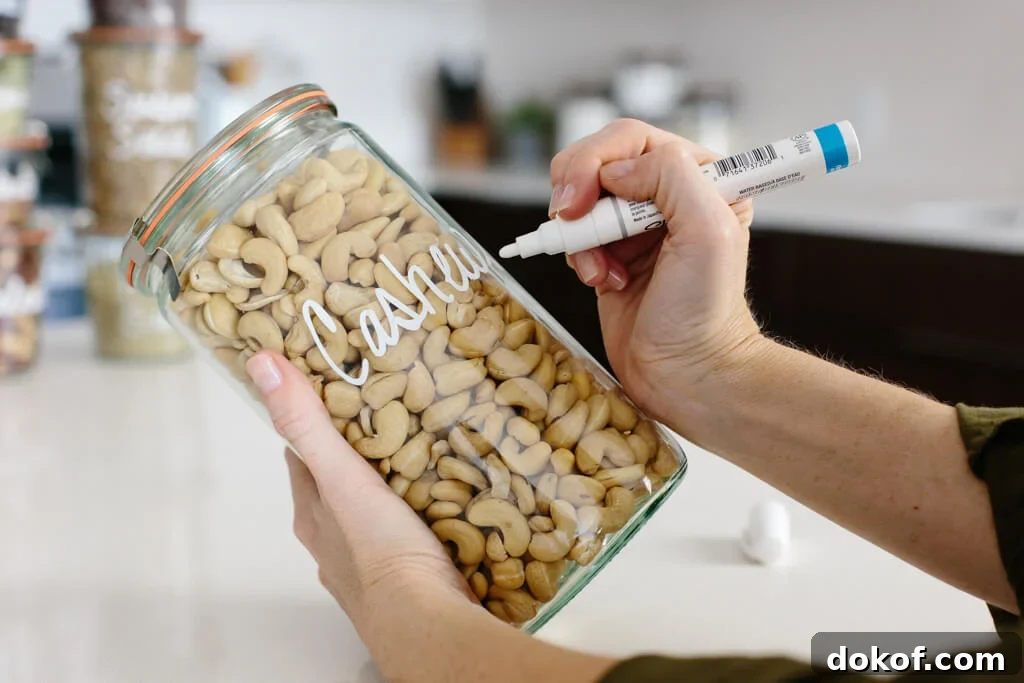
Create a healthy pantry and easily locate ingredients—even in a small space—by using glass containers and a few practical organization strategies. Customize your jars with handwritten labels using a water-based paint pen for a cohesive, easy-to-navigate setup. The suggestions below are based on what worked well for me during a recent kitchen refresh.
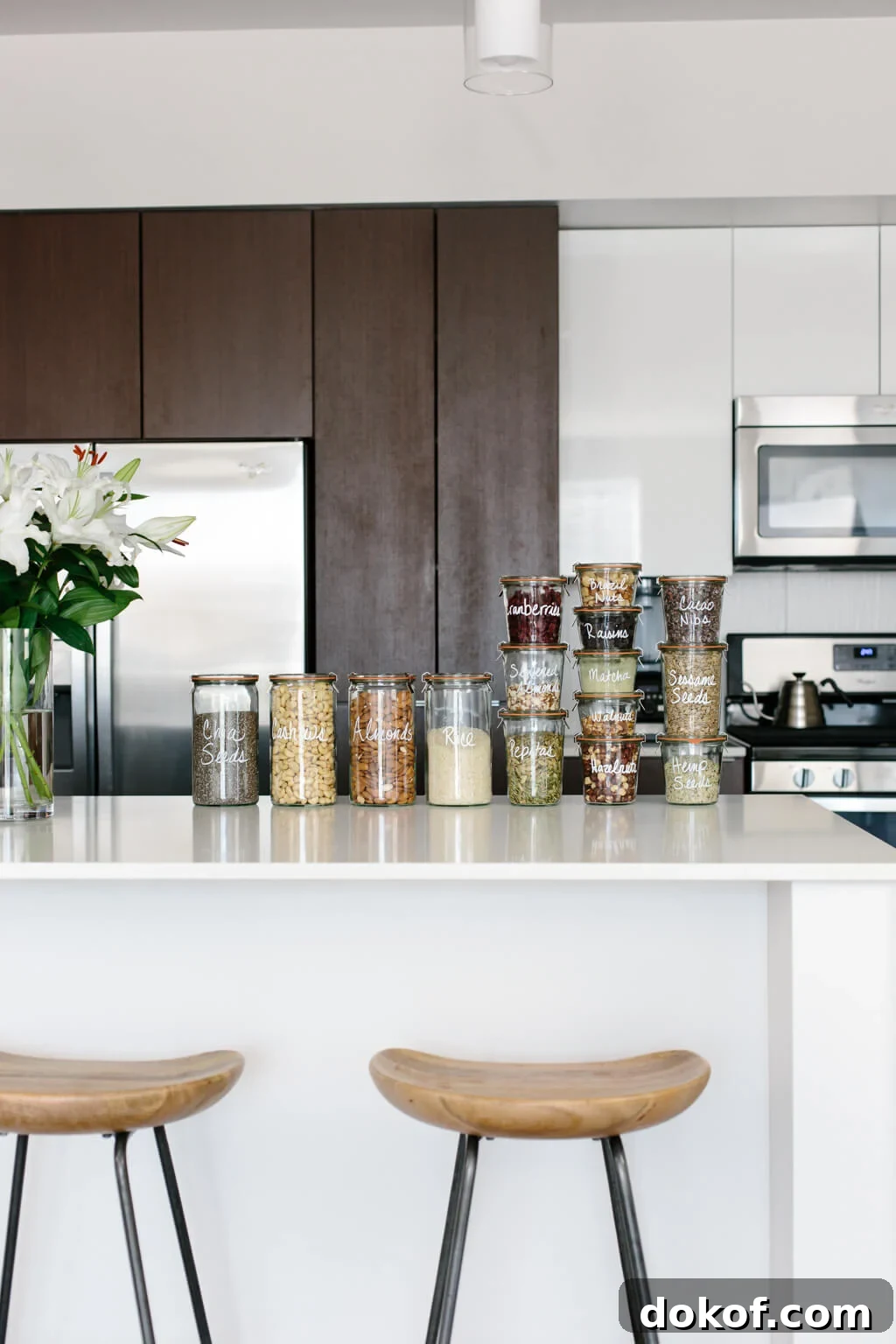
Moving homes forces you to review everything you own, and while the process can be a lot of work, it’s also a great opportunity to declutter and simplify. I donated items I no longer needed and embraced a cleaner, more minimalist aesthetic—warm modern with Scandinavian and rustic influences. White space and intentional storage made the kitchen feel calmer and more functional.
Watch my pantry organization video by clicking below:
Subscribe to my YouTube channel for weekly cooking and organization videos.
As someone who spends a lot of time in the kitchen, I focused on organizing that space first. In the past I used BPA-free plastic containers for dry goods, but later discovered many BPA-free plastics can still contain harmful chemicals. For this reason I moved entirely to glass containers during the remodel.
Pantry organization: moving everything from plastic to glass
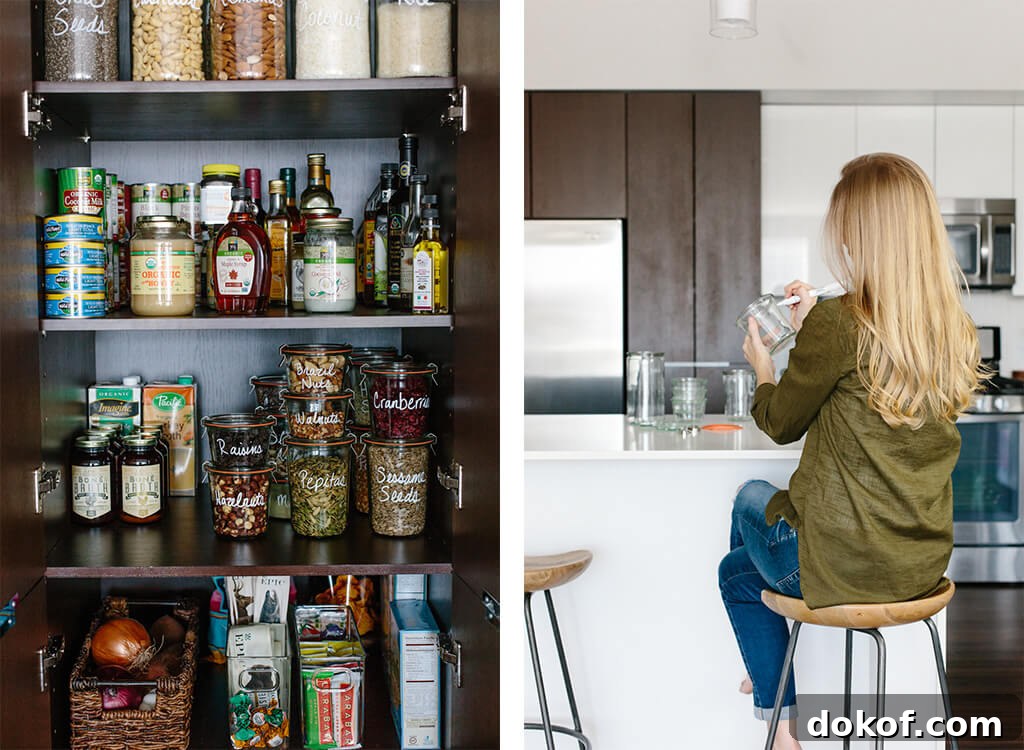
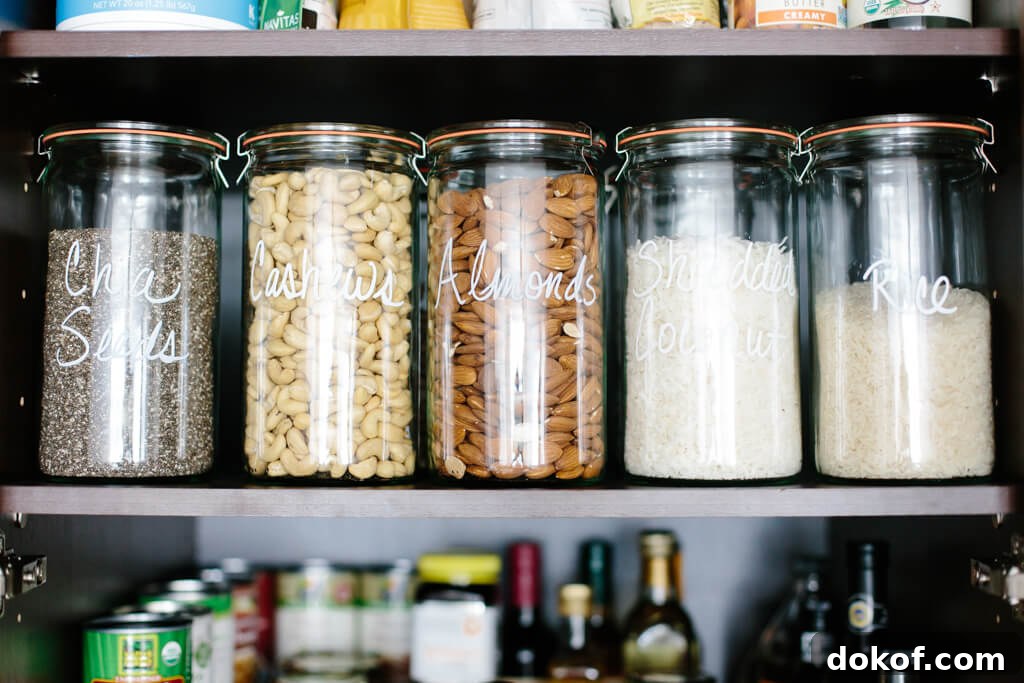
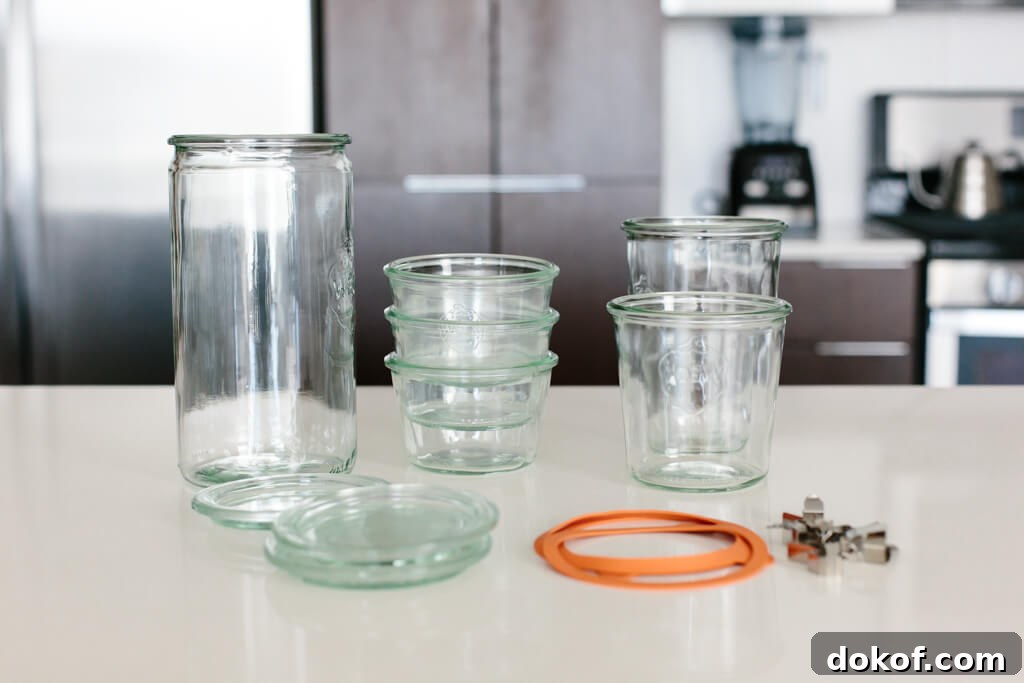
My primary goal was to eliminate plastic from food storage. Plastic containers I used previously weren’t always airtight, and several batches of nuts went rancid faster than expected. I switched to Weck glass jars because they’re durable, attractive, and airtight with their gaskets and clips. The cylindrical jars are easy to grab with one hand, and the airtight seal helps keep nuts, seeds, and dried fruit fresh for longer.
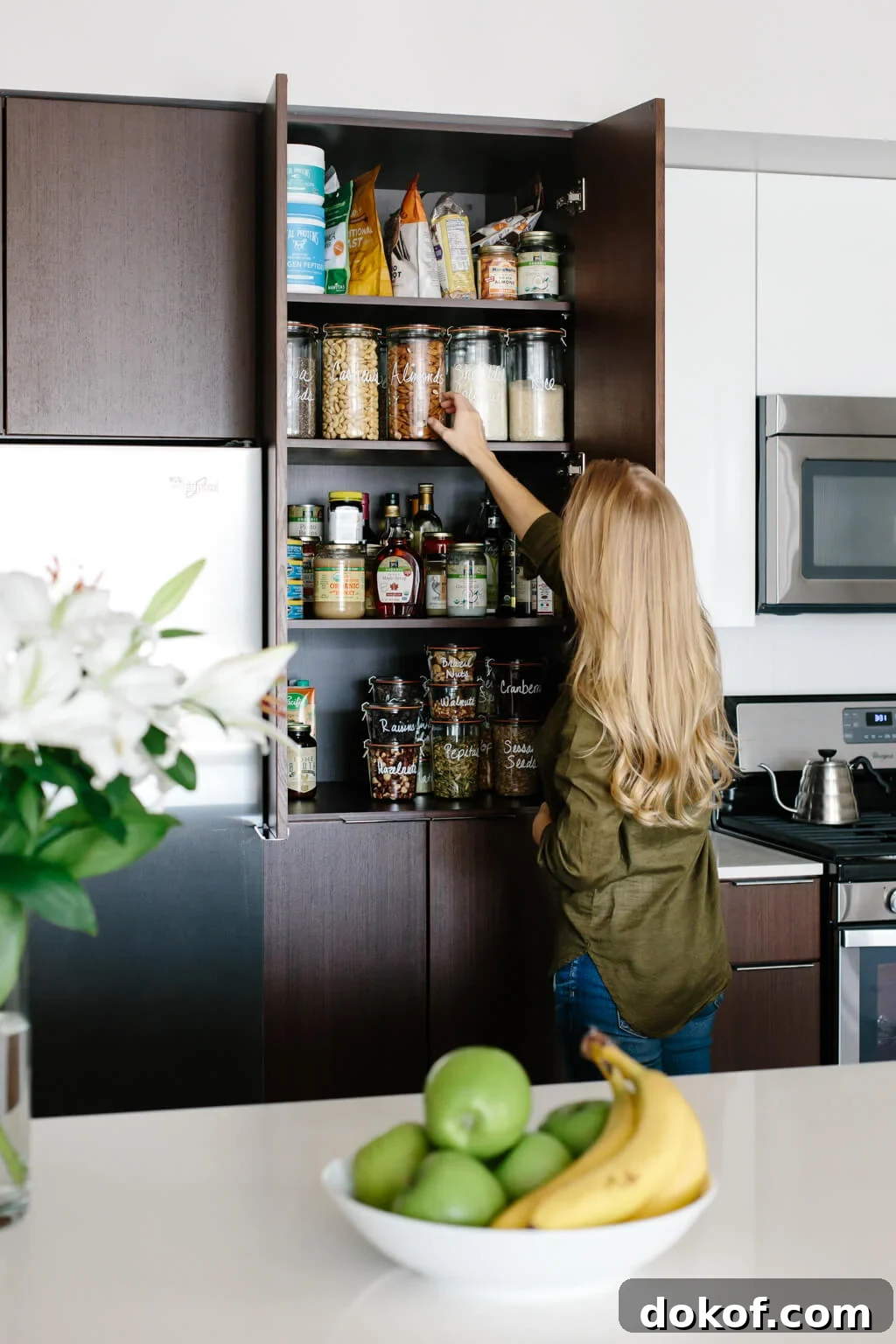
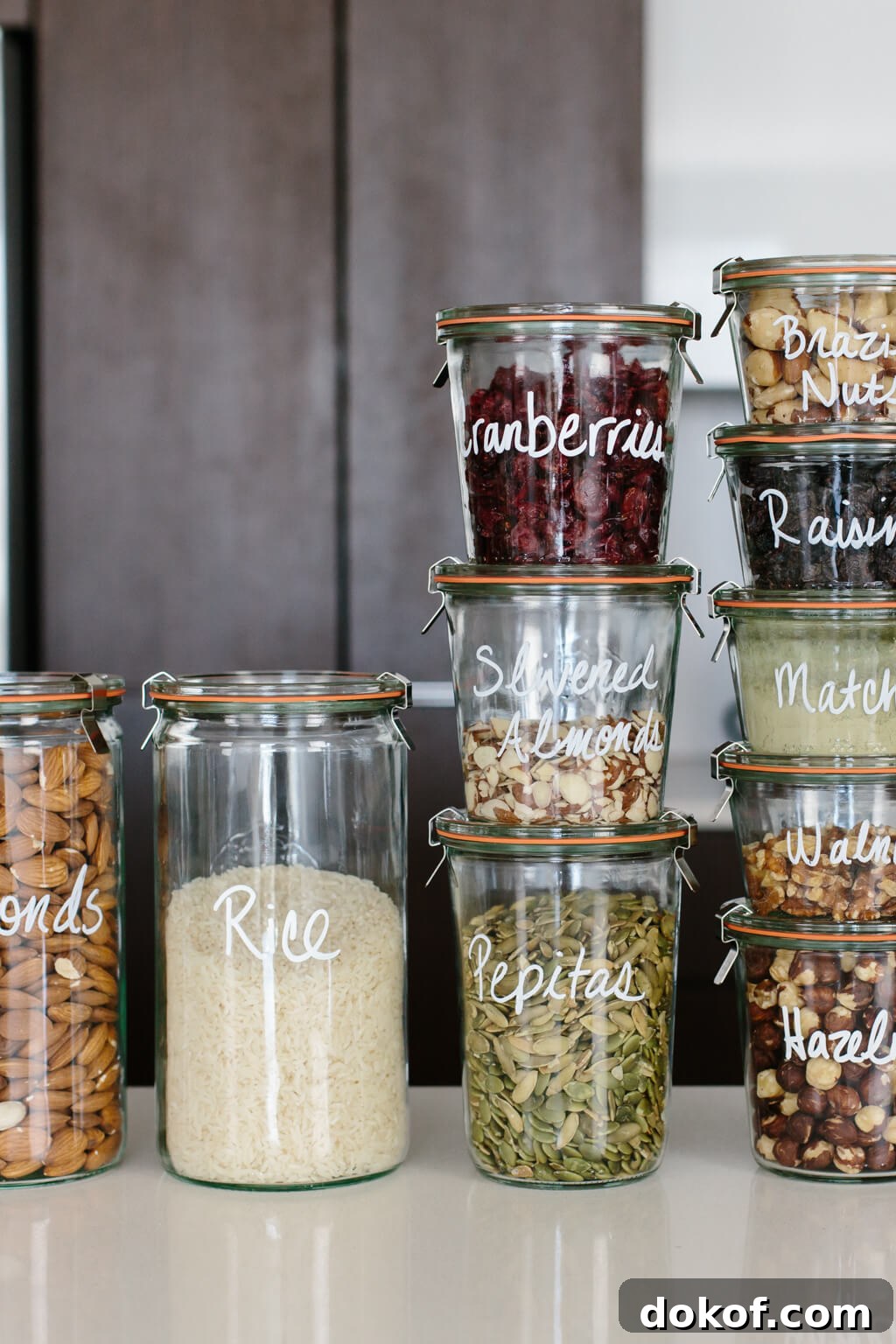
I chose a few consistent sizes so lids matched and jars lined up neatly. Cylindrical jars create an even row, while the slightly tapered mold jars stack efficiently. That uniformity helps maximize vertical space and keeps the pantry looking tidy.
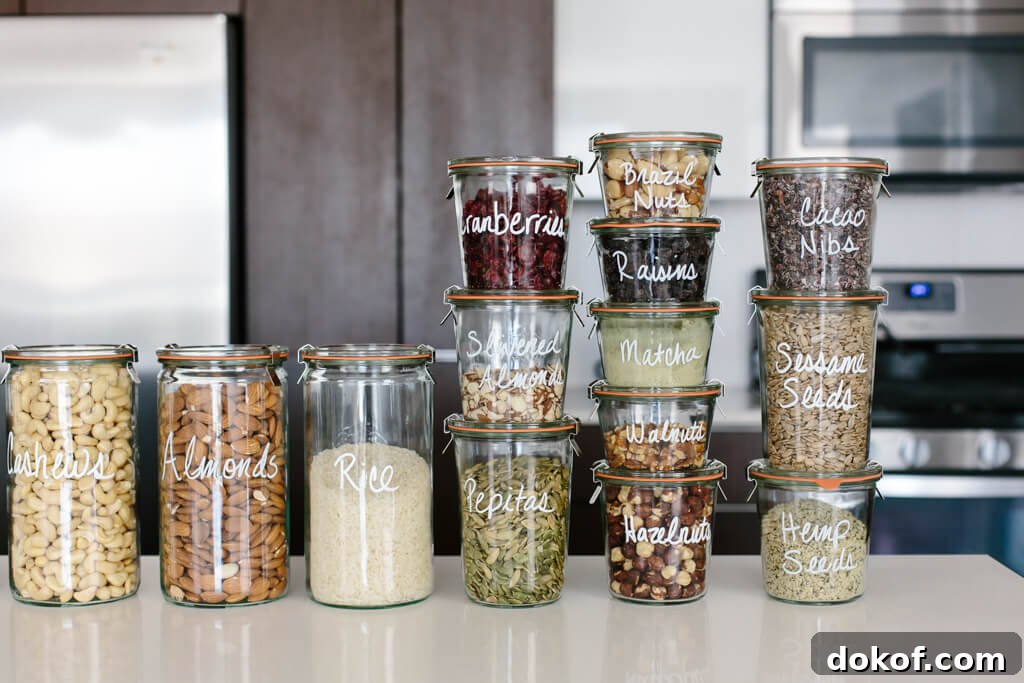
Glass jars are also dishwasher-safe, which makes switching contents or cleaning simple. For ingredients like nuts, seeds, and berries I prefer the glass lids with gaskets for the most reliable seal, though cork lids are another aesthetic option.
Large countertop jars for flours
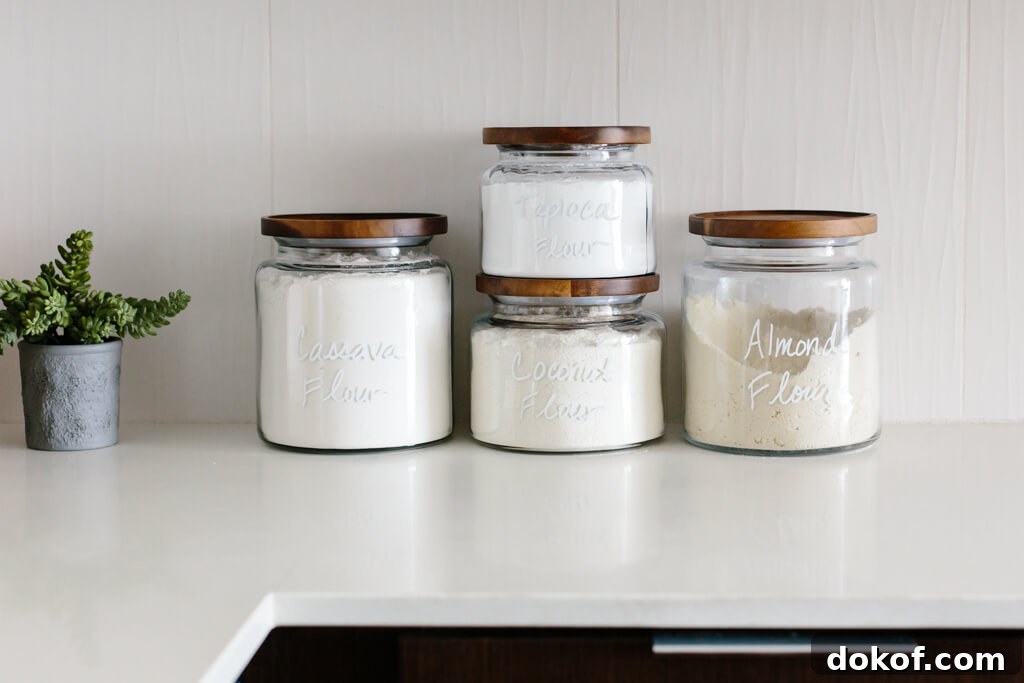
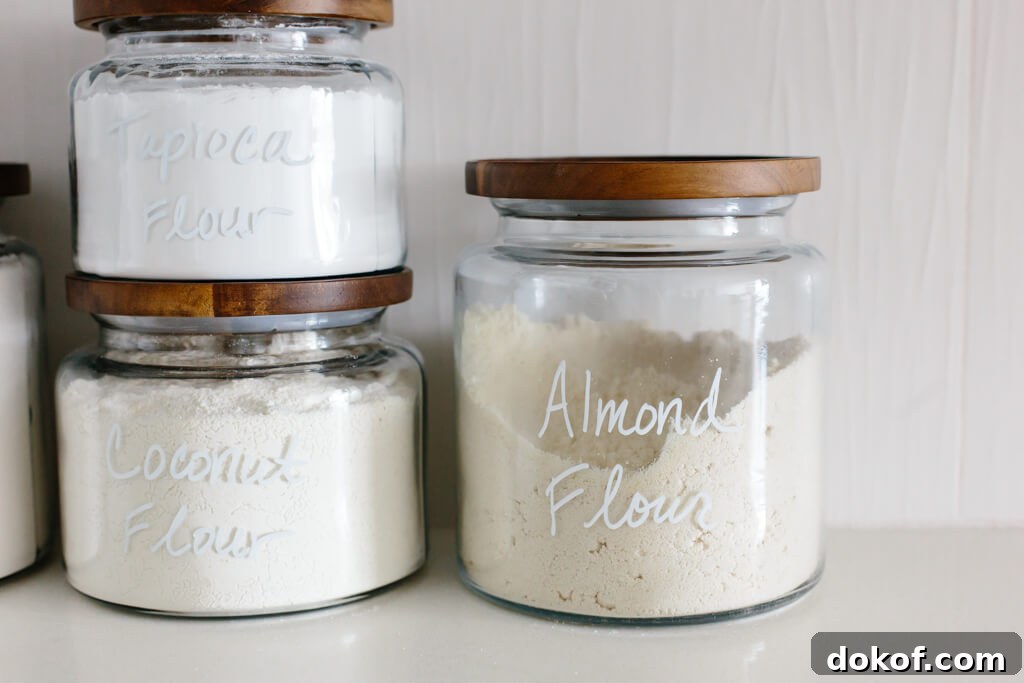
Because I follow a gluten-free diet, I keep several flours on hand—almond, tapioca, coconut and cassava. I chose large countertop jars with wide openings so measuring cups fit easily. The jars I used have acacia wood lids that match my kitchen’s wood tones, so they’re both functional and decorative. Large jars are perfect for frequently used baking ingredients and look attractive left on the counter.
Customizing jars with water-based paint markers
Labeling jars was one of my favorite parts of reorganizing. I used a water-based paint marker to handwrite labels directly on the glass. The white, medium-tip marker complements my minimalist look and helps ingredients stand out in a darker pantry. If you make a mistake you can wipe it off while it’s still wet and rewrite; after drying it resists smudging but can be removed later with a bit of water and scrubbing.
Wood basket and snack containers
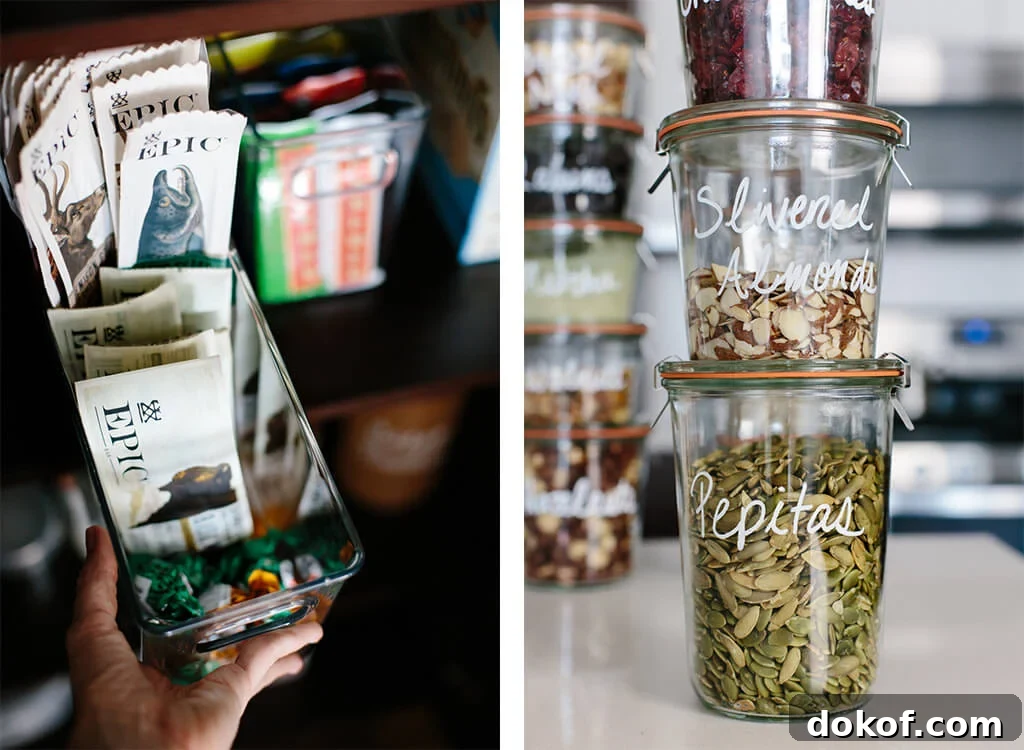
I keep sweet potatoes, onions and garlic in a long, narrow wood basket that slides in and out of the pantry easily. The handles make it simple to lift, and felt furniture sliders on the bottom prevent shelf scratches. Narrow, handled snack containers work the same way for bars and snack packs—easy to pull out and keep upright so items don’t get lost behind other packages.
Pantry ingredients and how to store them
A healthy pantry focuses on whole-food ingredients. I avoid bulk refill bins because of potential gluten cross-contamination and instead buy sealed organic bags of staples like cashews, almonds and chia seeds, then transfer them to glass jars. Fresh ingredients such as nuts, seeds and berries are best consumed within a few months, so avoid buying excessive quantities.
Healthy eating doesn’t mean giving up snacks. I keep clean-ingredient bars and savory snacks on hand, focusing on brands that align with my values and ingredient standards. Storing them in narrow bins keeps everything visible and accessible.
Some pantry staples and favorites I keep on hand
- Wild Planet tuna
- Organic coconut oil
- Organic avocado oil
- Organic coconut milk
- Organic honey
- Organic maple syrup
- Organic coconut sugar
- Raw cacao powder
- Pure vanilla extract
- Organic apple cider vinegar
- Healthy snack bars and protein bars
- Collagen powder (useful for recipes and smoothies)
Everyday kitchen items I use:
- Counter stools that fit the space
- A high-quality blender
- A reliable tea kettle
- An easy-to-reach utensil holder
- A good knife block
- A sturdy wood cutting board
I hope this peek into my pantry offers practical inspiration for your own organization project. Using glass jars, clear labels, and narrow baskets maximizes space and keeps ingredients fresh and visible. If you try these ideas, you’ll likely find your kitchen feels both cleaner and more functional.