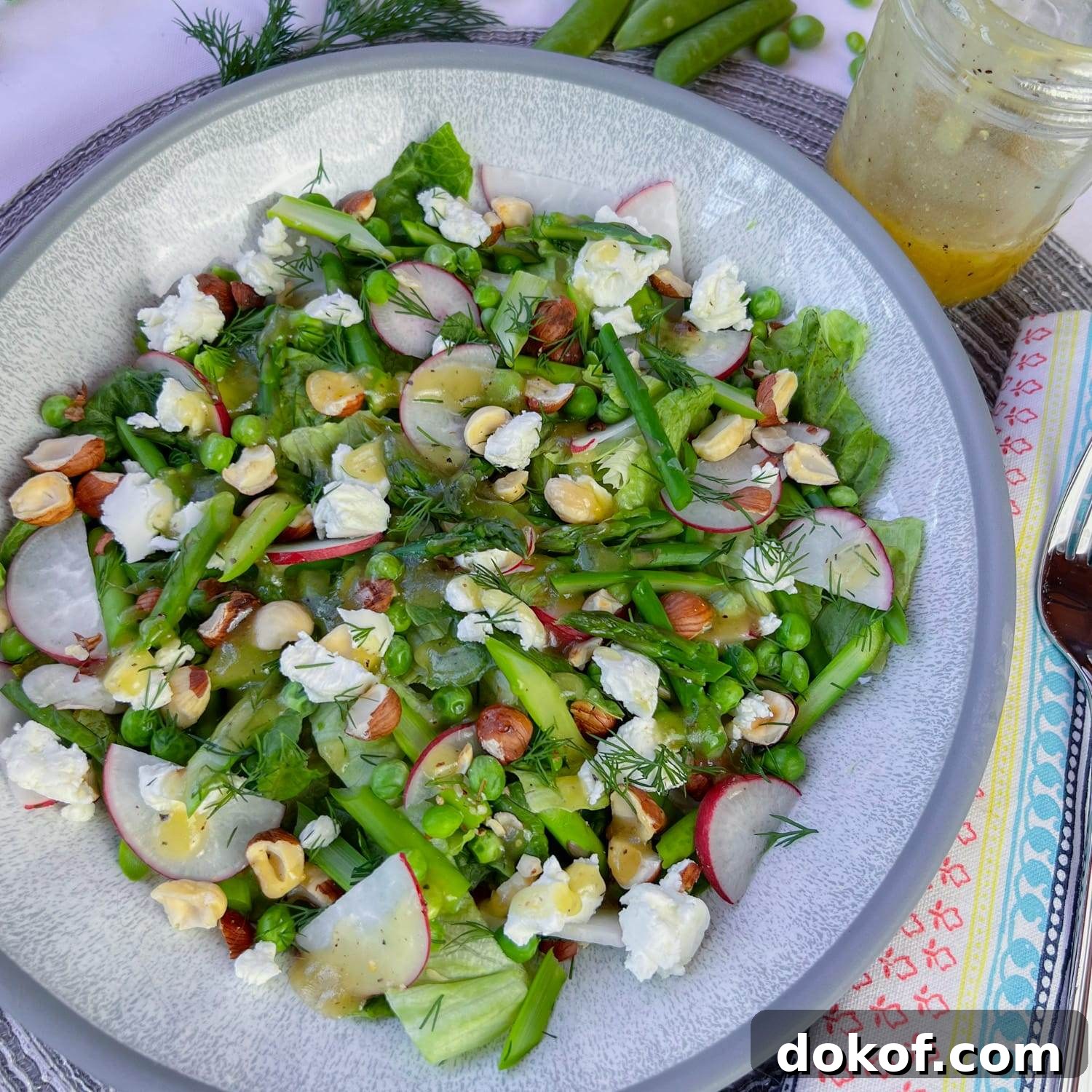
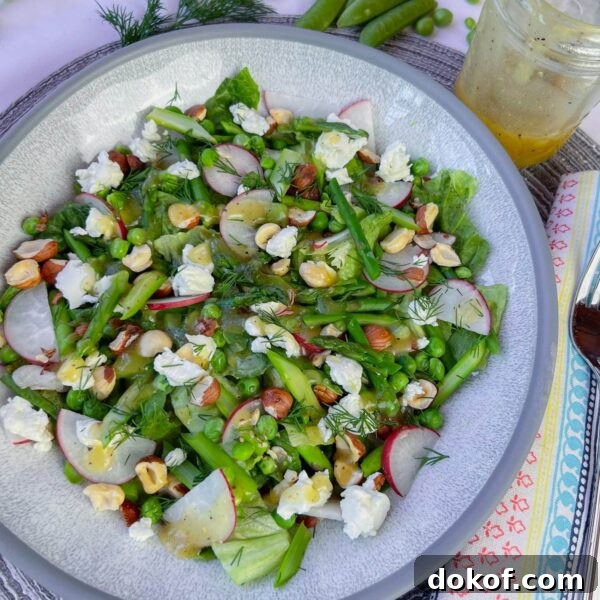
Celebrate spring with this bright and flavorful Asparagus Salad. This seasonal dish pairs tender asparagus with sweet peas, crisp radishes, creamy goat cheese, and toasted hazelnuts, all finished with a tangy Dijon vinaigrette. The combination of fresh flavors and varied textures makes it perfect as a side or a light main for spring gatherings.
Also Read: Selecting and Storing Asparagus, Asparagus Tomato Gnocchi, Asparagus and Pickerel Sheet Pan Dinner
Preparing Asparagus for Salad
There are many ways to prepare asparagus for a salad. You can serve it raw for a crisp bite, shave it into ribbons for a delicate texture, or blanch it to bring out a brighter color and softer tender bite. Choose the method that best matches the texture you want and the age of your asparagus—young spears are ideal raw, while thicker spears often benefit from blanching.
Raw Asparagus in Salad
Raw asparagus delivers a fresh, crunchy texture and grassy flavor. For the most pleasant raw experience, use young, tender spears. Shave with a vegetable peeler into thin ribbons, or slice lengthwise to make thicker spears easier to eat.
Blanching Asparagus for Salad
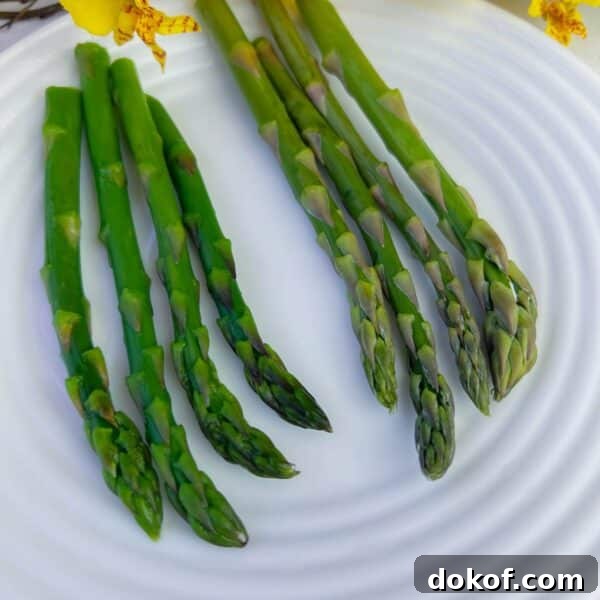
Blanching softens the asparagus slightly, locks in a vibrant green color, and mellows any bitterness. To blanch, briefly cook spears in boiling salted water, then immediately transfer to ice water to stop cooking. Once cooled and dried, cut the asparagus to the shape you prefer: whole spears for a rustic look, lengthwise halves or quarters for thick spears, diagonal slices for visual appeal, bite-sized pieces for everyday salads, or rounds for a different texture.
- Retains vibrant green color
- Tenderizes asparagus while keeping a crisp bite
- Milds any bitterness for a gentler flavor
Substitutions and Alternatives
This salad is a flexible template—swap ingredients based on what you have or prefer. A few easy substitutions:
- Replace hazelnuts with toasted almonds, walnuts, or pine nuts.
- Use feta or blue cheese instead of goat cheese.
- If fresh peas aren’t available, use thawed frozen peas or blanched sugar snap peas.
- Swap radishes for thinly sliced cucumber or shaved fennel.
- For a vegan version, omit the goat cheese or use a dairy-free alternative.
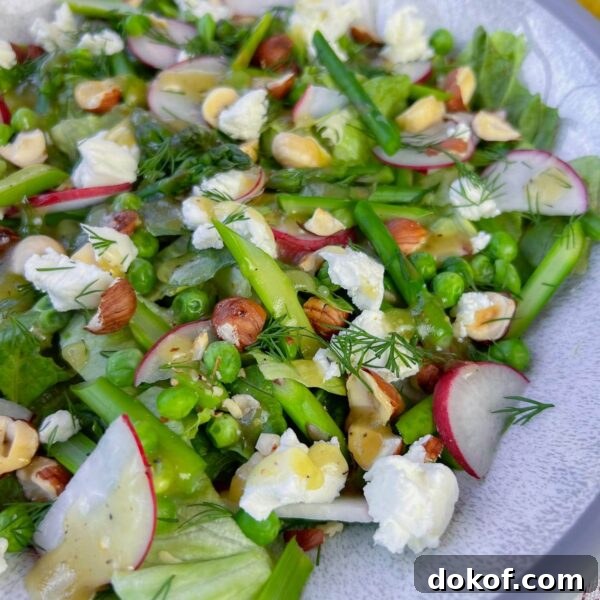
How to Make it a Full Meal — Adding Protein
Add protein to turn the salad into a satisfying main. Here are easy meat and non-meat options:
Meat Options
- Grilled steak or roast beef, sliced thin.
- Pan-seared shrimp, cooked until pink.
- Shredded or diced roasted chicken or rotisserie chicken.
- Crispy bacon or fried deli meat for a salty crunch.
- Thinly sliced turkey or ham.
- Torn or sliced prosciutto.
Non-Meat Options
- Hard-boiled eggs, sliced or chopped.
- Pan-seared or baked tofu cubes.
- Cooked quinoa for added bulk and protein.
- Steamed or boiled edamame.
- Crispy roasted chickpeas for texture.
- Grilled or pan-seared halloumi.
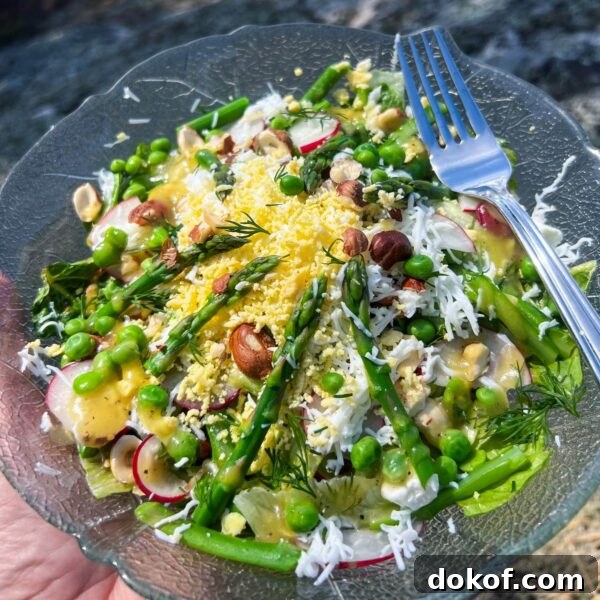
How to Shred or Grate an Egg
Shredded hard-cooked egg adds an elegant, delicate garnish. To make it:
- Cook the egg until hard-cooked, then cool it completely.
- Grate the egg using a box grater or microplane—use large or small holes depending on the look you want.
- Optionally separate whites and yolks and grate them separately for different textures or colors.
Season lightly with salt and pepper or try paprika, Cajun seasoning, Everything Bagel spice, or a dash of hot sauce. Grate directly over the salad or toast for the best presentation, and handle delicate shreds gently to keep them airy.
Recipe for Springtime Asparagus Salad

Springtime Asparagus Salad
Ingredients
- 1 bunch asparagus, tough ends trimmed
- 1 cup fresh peas
- 4–6 radishes, thinly sliced
- 4 cups mixed lettuce or baby spinach
- 1/2 cup hazelnuts, toasted and roughly chopped
- 4 oz goat cheese, crumbled
- 1 Tbsp chives or dill, fresh chopped
- Salt and pepper to taste
Dressing:
- 1/4 cup salad oil (olive oil or favorite oil)
- 2 tablespoons white wine vinegar
- 1 teaspoon Dijon mustard
- 1 teaspoon honey
- Salt and pepper to taste
Instructions
Dressing
- Whisk together oil, white wine vinegar, Dijon mustard, honey, salt, and pepper until combined. Set aside.
Prepare the Asparagus and Peas
- Bring a pot of salted water to a boil. Blanch asparagus 2–3 minutes until just tender, then transfer to ice water to stop cooking. Drain and set aside.
- Blanch peas if desired in the same boiling water for about 2 minutes, then cool.
Assembly
- In a large bowl, toss lettuce with radishes, half the asparagus and peas, a light drizzle of oil, and a pinch of salt and pepper to help the seasoning adhere.
- Drizzle the dressing over the salad and gently toss to coat.
- Arrange remaining asparagus tips on top. Sprinkle with goat cheese, toasted hazelnuts, and chopped herbs.
- Serve immediately as an appetizer, lunch, or side dish.
Notes
Nutrition Facts (per serving)
More Ways to Enjoy Asparagus
- Pan steamed asparagus
- Grilled or oven roasted asparagus
- Asparagus and tomato gnocchi
- Asparagus and pickerel sheet pan dinner
I’d love to hear how you use asparagus—leave a comment or tag me on social media at @getgettys on Instagram or @GettyStewart.HomeEconomist on Facebook. If you grow your own asparagus, share photos—I enjoy seeing home patches.
Cook with the seasons, effortlessly! I’m Getty, a food educator and Professional Home Economist, helping you select, store, and serve seasonal ingredients in simple, everyday meals.
Step-by-step Guide to Vinaigrette
Vinaigrettes typically use twice as much oil as acid and rely on an emulsifier. Use a 2:1 ratio of oil to acid and add an emulsifier such as mustard or honey. This guide covers ratios, flavor ideas, and dressing recipes to make perfect vinaigrettes every time.
- Get the right ratios for dressing success
- Ideas for flavors and emulsifiers
- Salad and dressing recipes you’ll enjoy