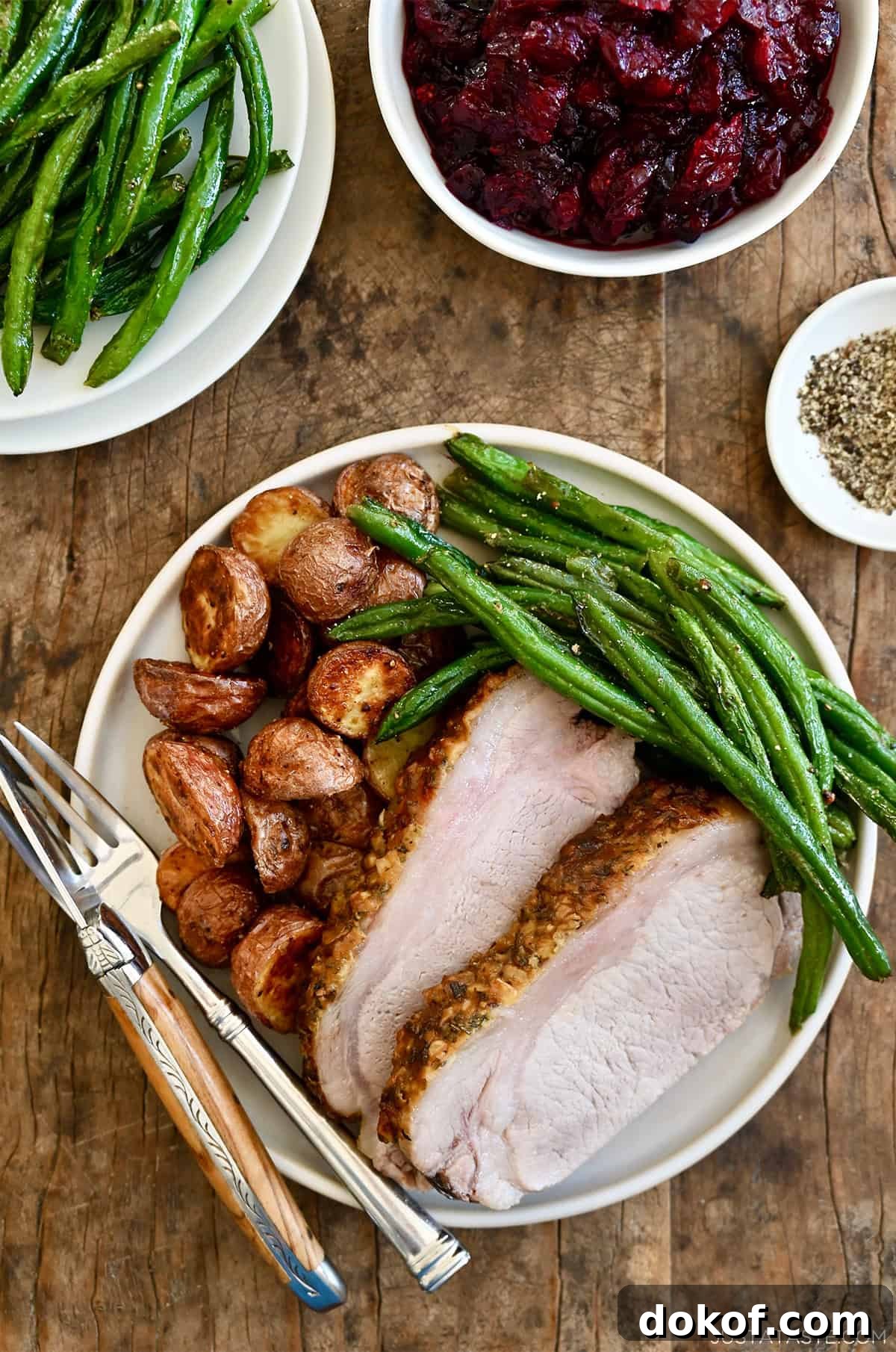
This tender pork loin roast is an easy, impressive dinner with a golden herb crust and juicy slices every time. A simple garlic, Dijon, rosemary and thyme rub adds big flavor without complicated prep. Start the roast at high heat to help the outside brown, then finish it gently until the pork reaches the perfect internal temperature. Serve it with mashed potatoes, roasted vegetables and the pan drippings for a meal that feels special but is simple enough for any night of the week.
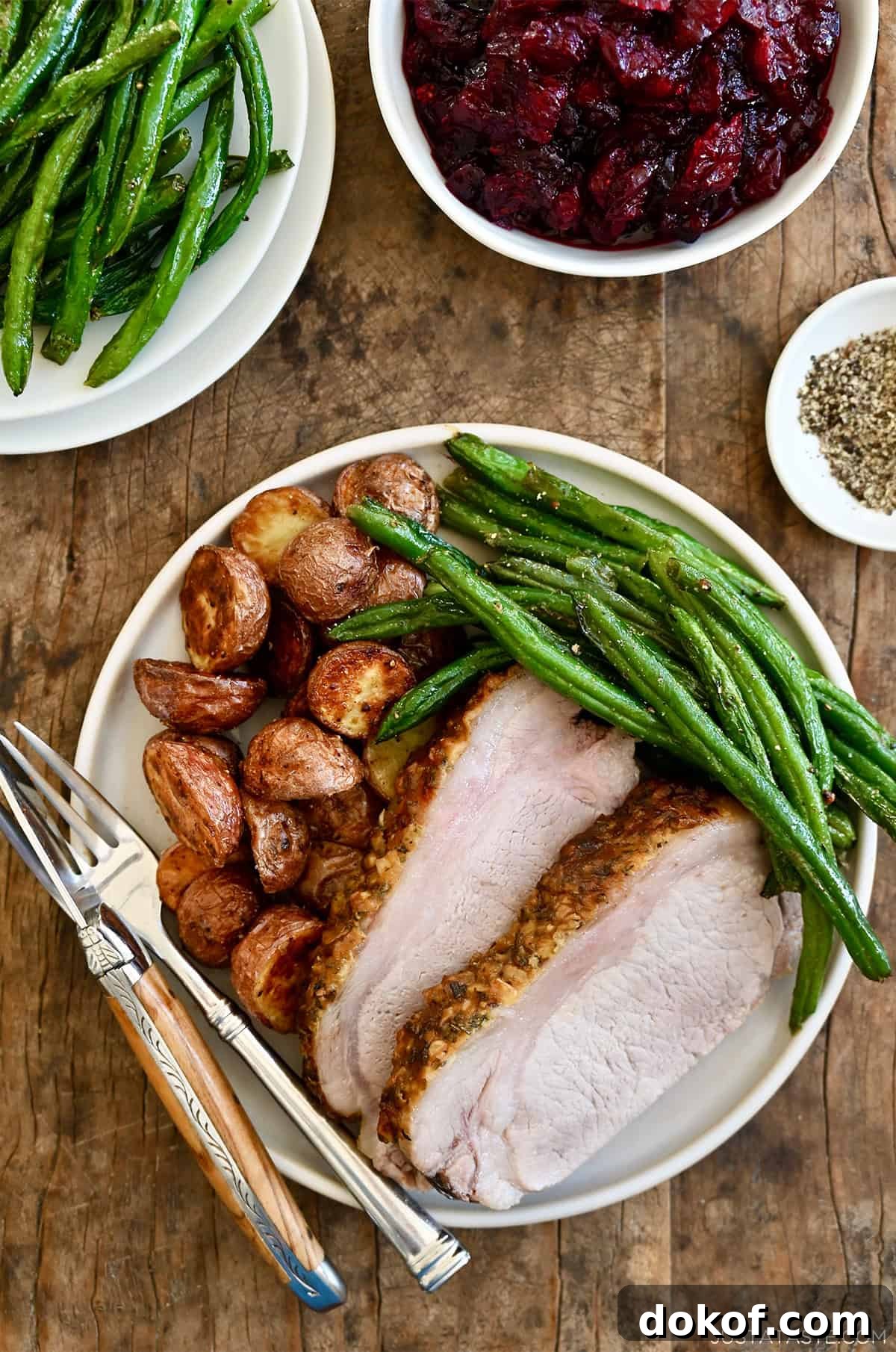
Table of Contents
- Pork Loin vs. Pork Tenderloin (What’s the Difference?)
- Ingredients
- How to Make the Juiciest Pork Loin Roast
- At What Temp Is Pork Loin Done?
- Favorite Sides to Serve
- Storage and Reheating Tips
- Herb-Crusted Pork Loin Roast Recipe

A classic pork loin roast is one of those dependable dinners that deserves more attention. It comes out of the oven looking beautiful, slices neatly for serving and pairs well with nearly any side dish.
This herb-crusted pork loin roast is especially useful because it relies on simple ingredients and a straightforward roasting method. The wet rub takes only a few minutes to stir together, and the combination of garlic, fresh herbs, Dijon mustard and Worcestershire sauce creates a savory crust with plenty of depth.
The key to keeping pork loin juicy is cooking it to the right temperature and allowing it to rest before slicing. Once you master that, this recipe becomes an easy choice for Sunday dinner, holidays, casual entertaining or a comforting family meal.
Pork Loin vs. Pork Tenderloin (What’s the Difference?)
Before making this roasted pork loin recipe, it is important to understand that pork loin and pork tenderloin are not the same cut of meat. They may sound similar, but they differ in size, texture, fat content and cooking time. They should not be used interchangeably in this recipe.
Pork loin is a larger, wider cut that usually weighs between 2 and 4 pounds and often has a fat cap on top. It is ideal for roasting because it slices beautifully and stays moist when cooked properly. The fat cap helps baste the meat as it cooks and contributes to a flavorful crust.
Pork tenderloin is smaller, narrower and much leaner. It cooks quickly and is better suited to fast, high-heat methods. If pork tenderloin is cooked like a pork loin roast, it can become dry and overdone.
For this recipe, use a boneless pork loin roast. This cut gives you the best balance of a well-seasoned exterior and tender, juicy slices.
Ingredients
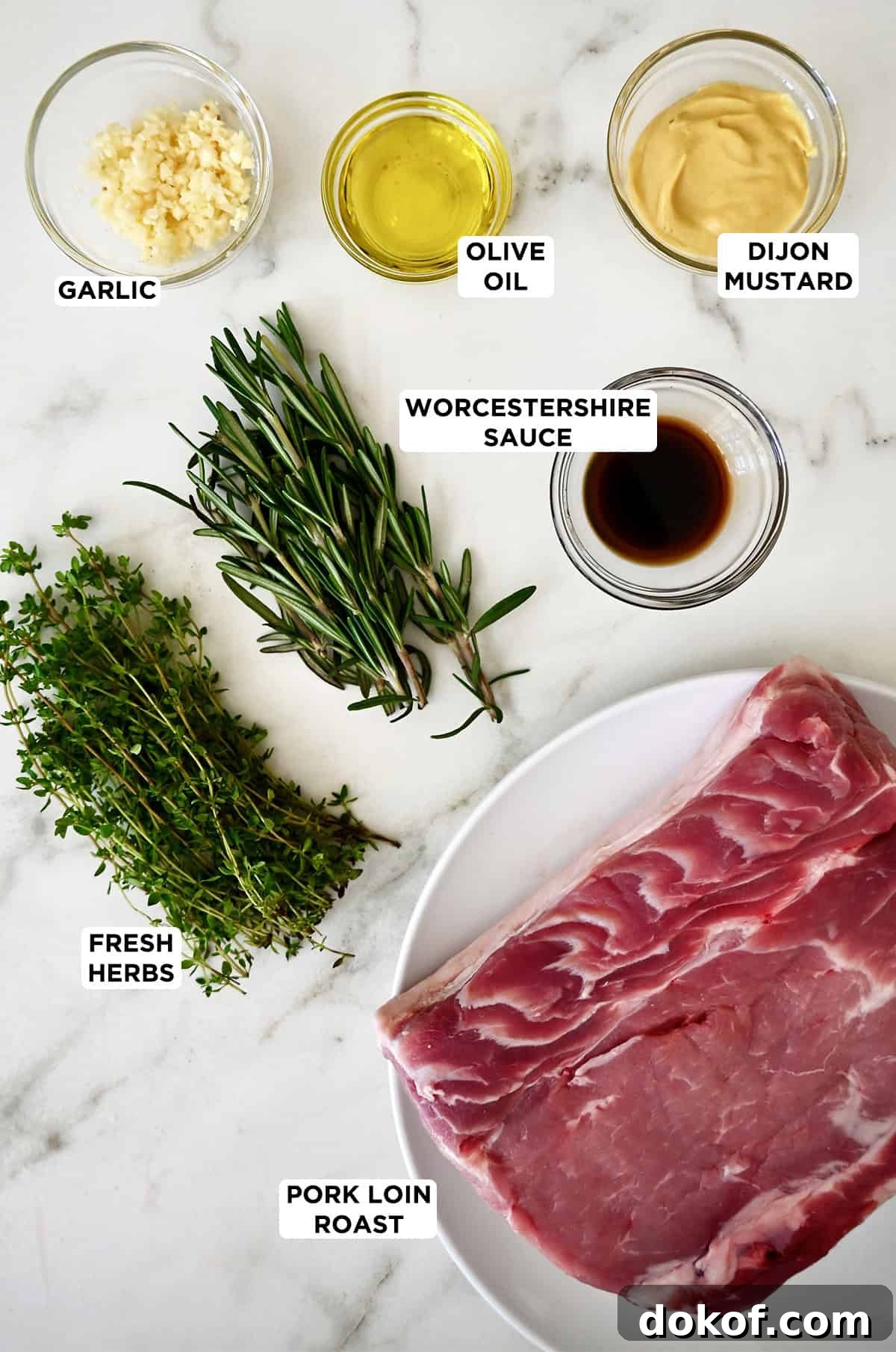
This pork loin roast recipe keeps the ingredient list short while still delivering bold flavor. The herb crust is savory, aromatic and easy to spread over the roast.
- Garlic: Minced garlic adds deep, savory flavor and works well with the herbs and mustard.
- Fresh rosemary and thyme: Fresh herbs give the roast a fragrant, classic flavor. If using dried herbs, use 1 teaspoon of each and rub them between your fingers before adding them to the mixture.
- Dijon mustard: Dijon adds tang, moisture and helps the herb mixture cling to the pork while encouraging a golden crust.
- Worcestershire sauce: This adds rich umami flavor and balances the sharpness of the mustard.
- Olive oil: Olive oil helps the rub spread evenly and supports browning in the oven.
- Boneless pork loin roast: Use a 2- to 3-pound boneless pork loin roast, not pork tenderloin. A small fat cap is helpful because it keeps the meat moist as it roasts.
See the recipe card below for exact ingredient amounts and full instructions.
How to Make the Juiciest Pork Loin Roast
This oven-roasted pork loin looks elegant on the table, but the method is very simple. Use a sturdy baking dish or cast-iron skillet, and have an instant-read thermometer ready. A thermometer is the most reliable way to prevent overcooking, especially with lean cuts of pork.
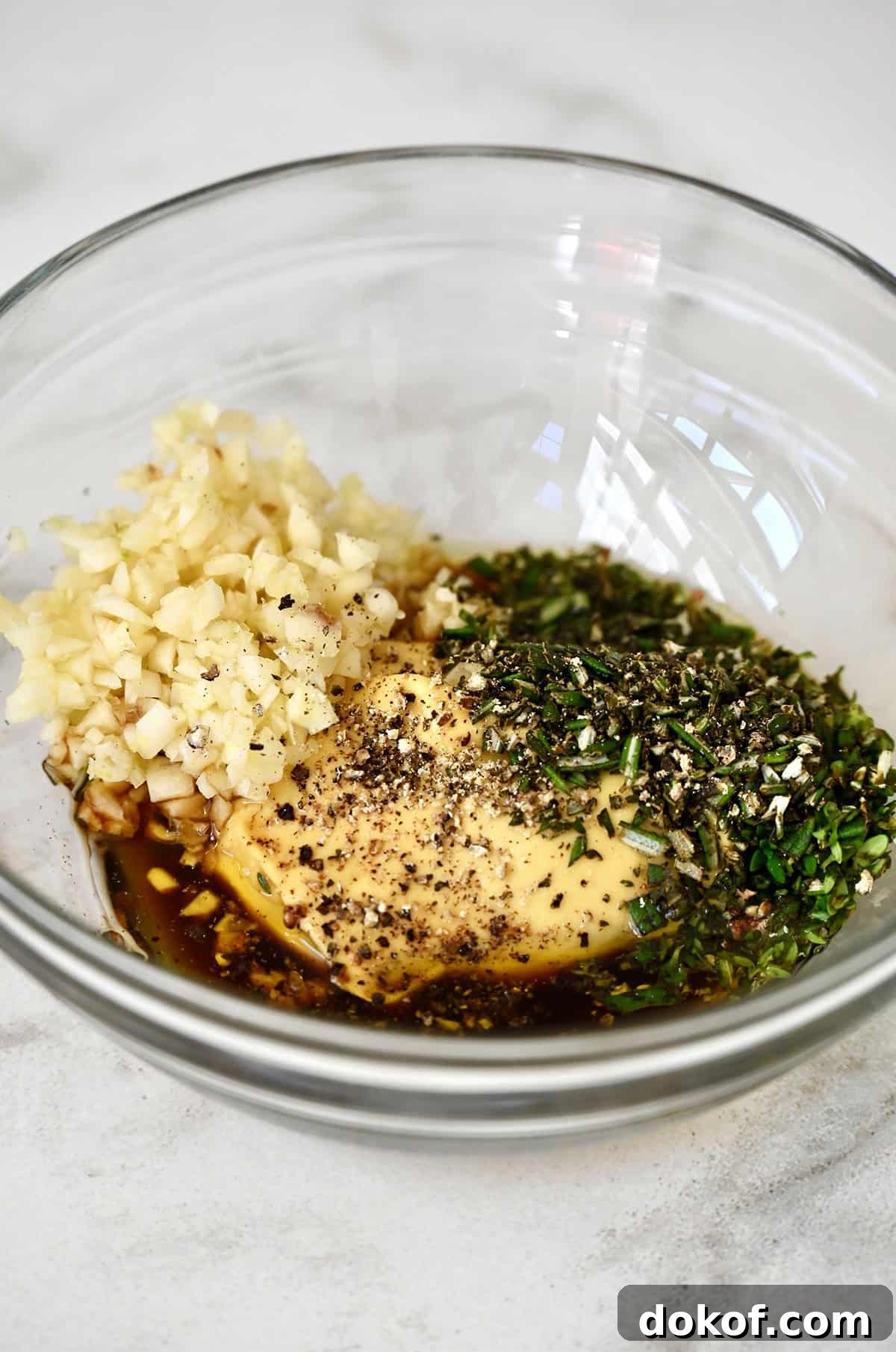
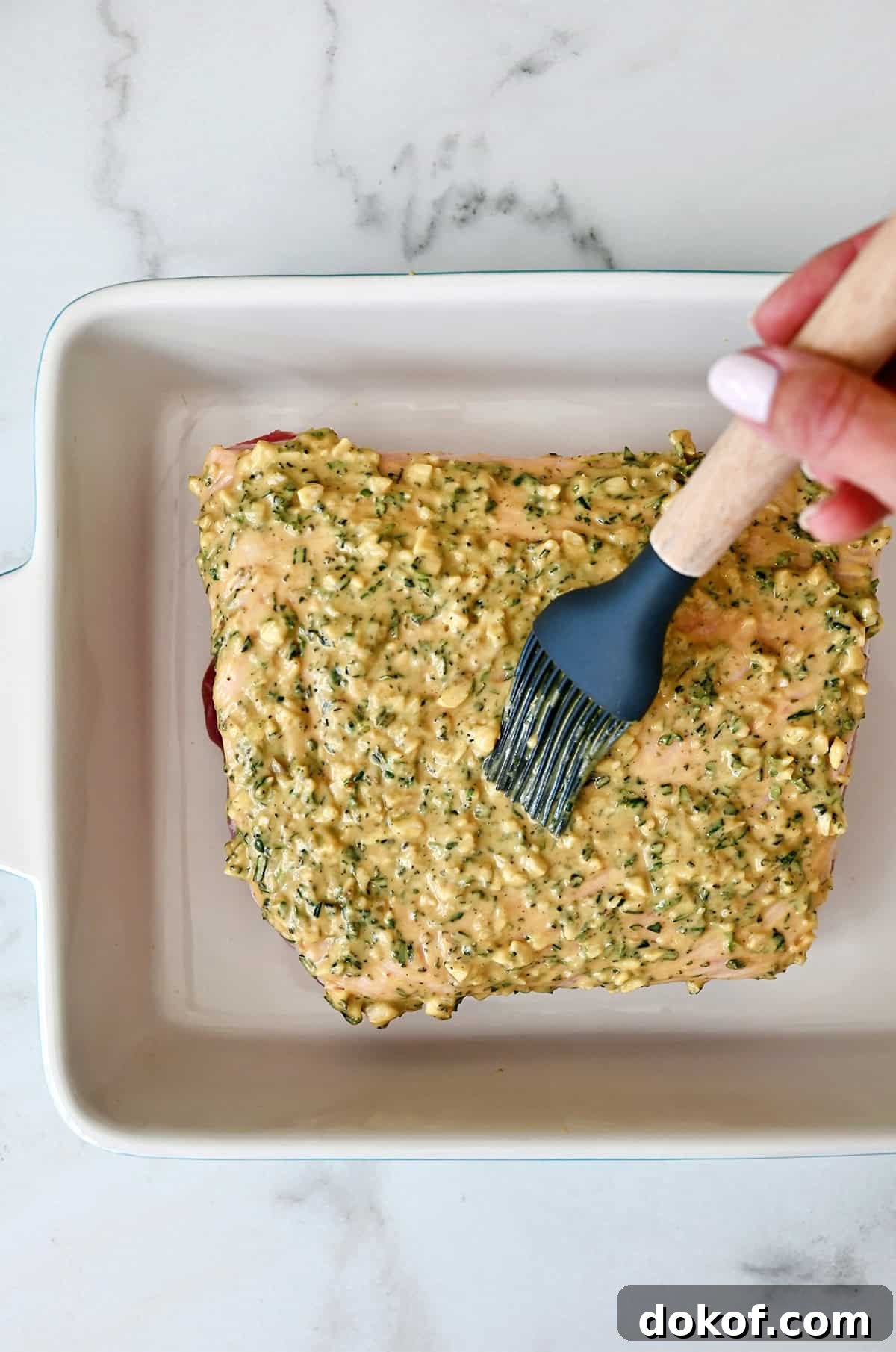
Begin by preheating the oven to 425°F. In a small bowl, combine the garlic, rosemary, thyme, Dijon mustard, Worcestershire sauce, olive oil and black pepper. This mixture should be thick enough to coat the top of the roast.
Pat the pork loin dry with paper towels. Removing excess moisture helps the outside brown instead of steam. Place the roast in the baking dish with the fat side facing up, then spread the herb-Dijon mixture evenly over the top.
Roast the pork at 425°F for 15 minutes. This first burst of high heat helps create color and begins forming the crust. Then reduce the oven temperature to 375°F and continue roasting until the internal temperature reaches 145°F. Depending on the size and shape of the roast, this usually takes about 40 to 45 minutes after lowering the temperature.
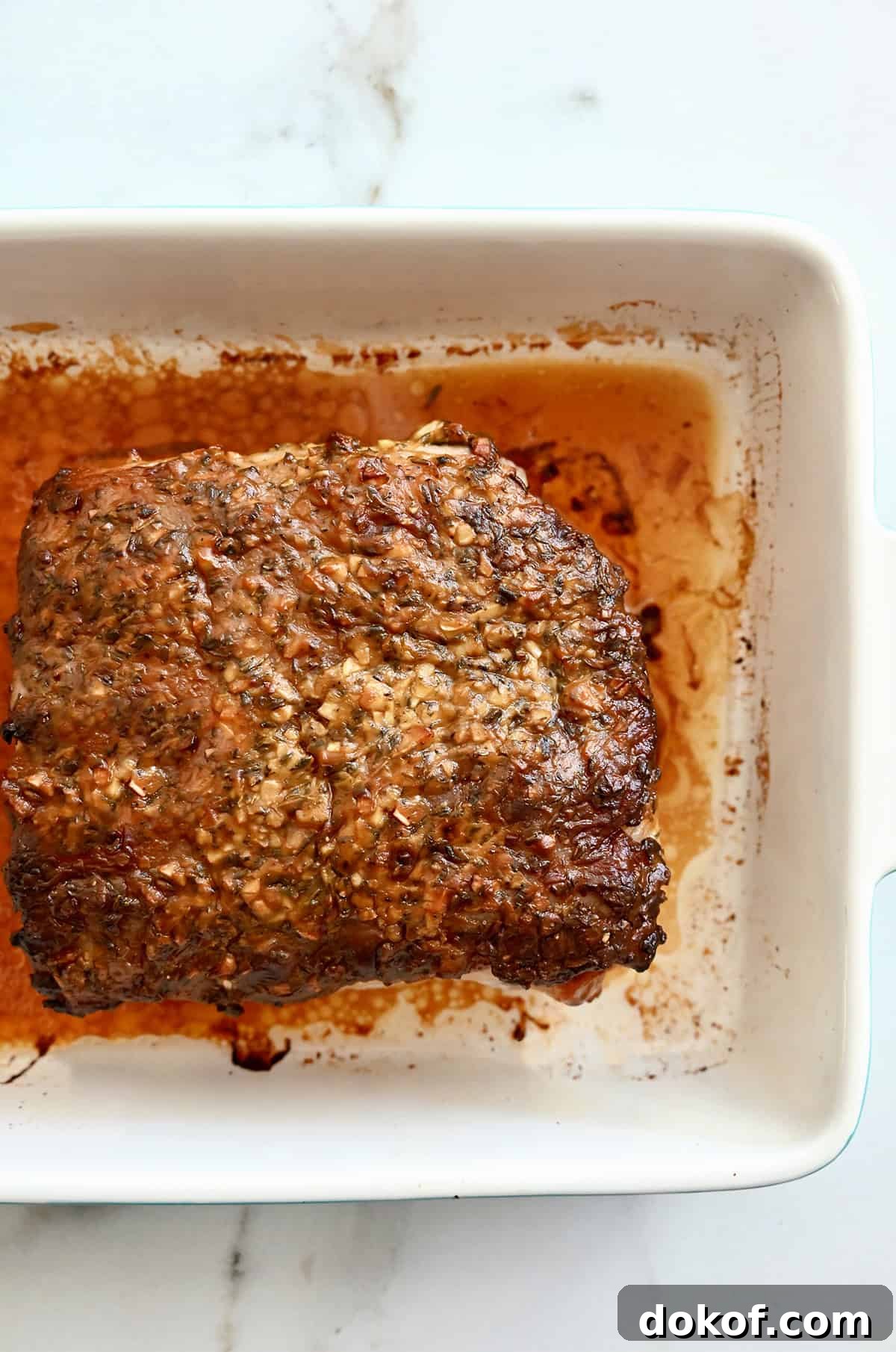
When the pork loin is done, remove it from the oven and tent it loosely with foil. Let it rest for 10 minutes before slicing. Resting gives the juices time to redistribute through the meat, making each slice more tender and flavorful. Save the pan drippings if you want to make gravy or spoon them over the sliced roast.
At What Temp Is Pork Loin Done?
The USDA recommends cooking pork loin to an internal temperature of 145°F, followed by a rest. This temperature gives you pork that is safe to eat while still remaining juicy and tender.
- Insert the thermometer into the thickest part of the roast, avoiding large pockets of fat.
- Begin checking the temperature before the estimated cook time is finished, since ovens and roast sizes vary.
- Remember that the pork will continue to cook slightly as it rests. Pulling it from the oven at 145°F helps avoid dry, overcooked meat.
Favorite Sides to Serve
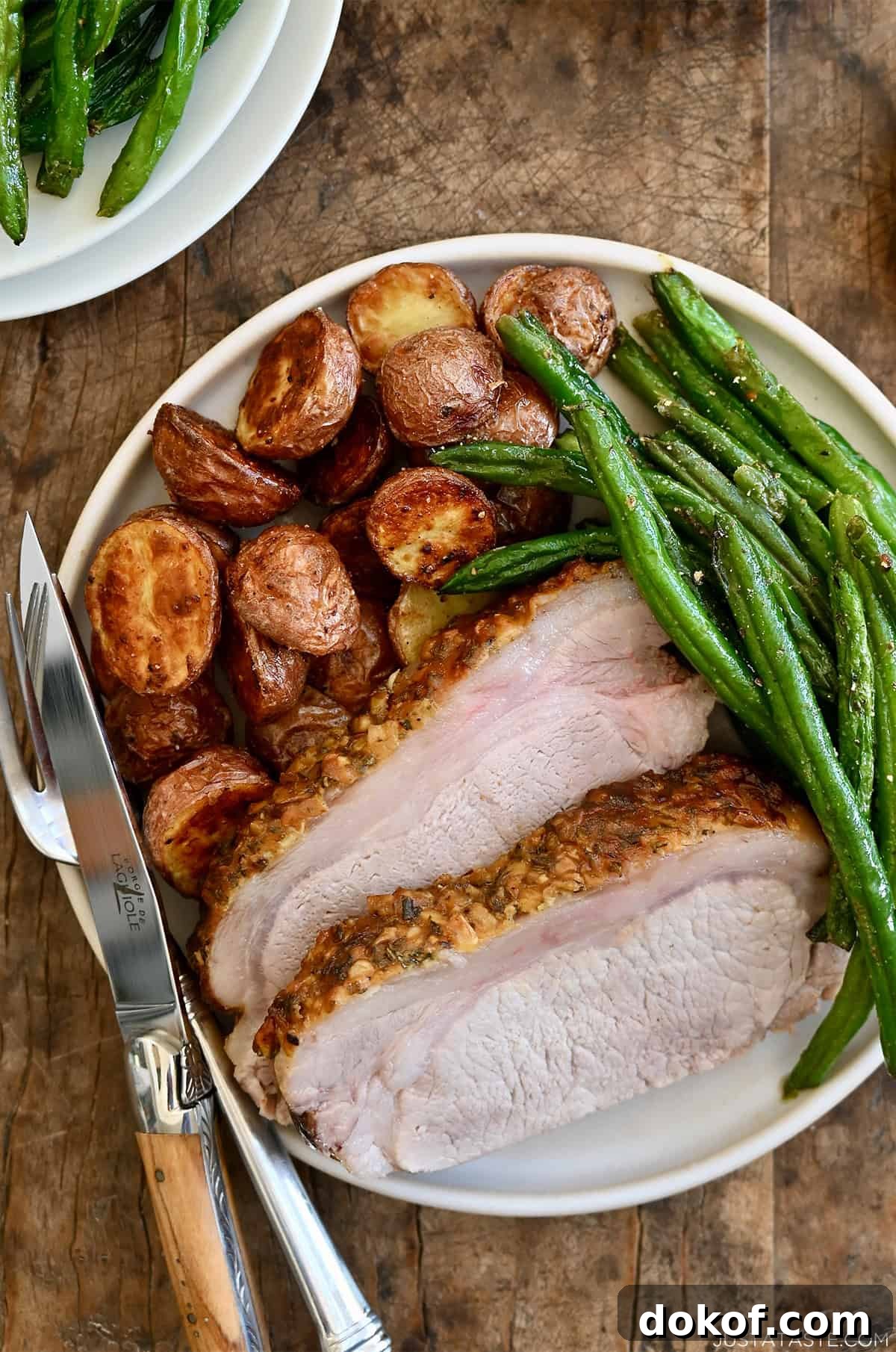
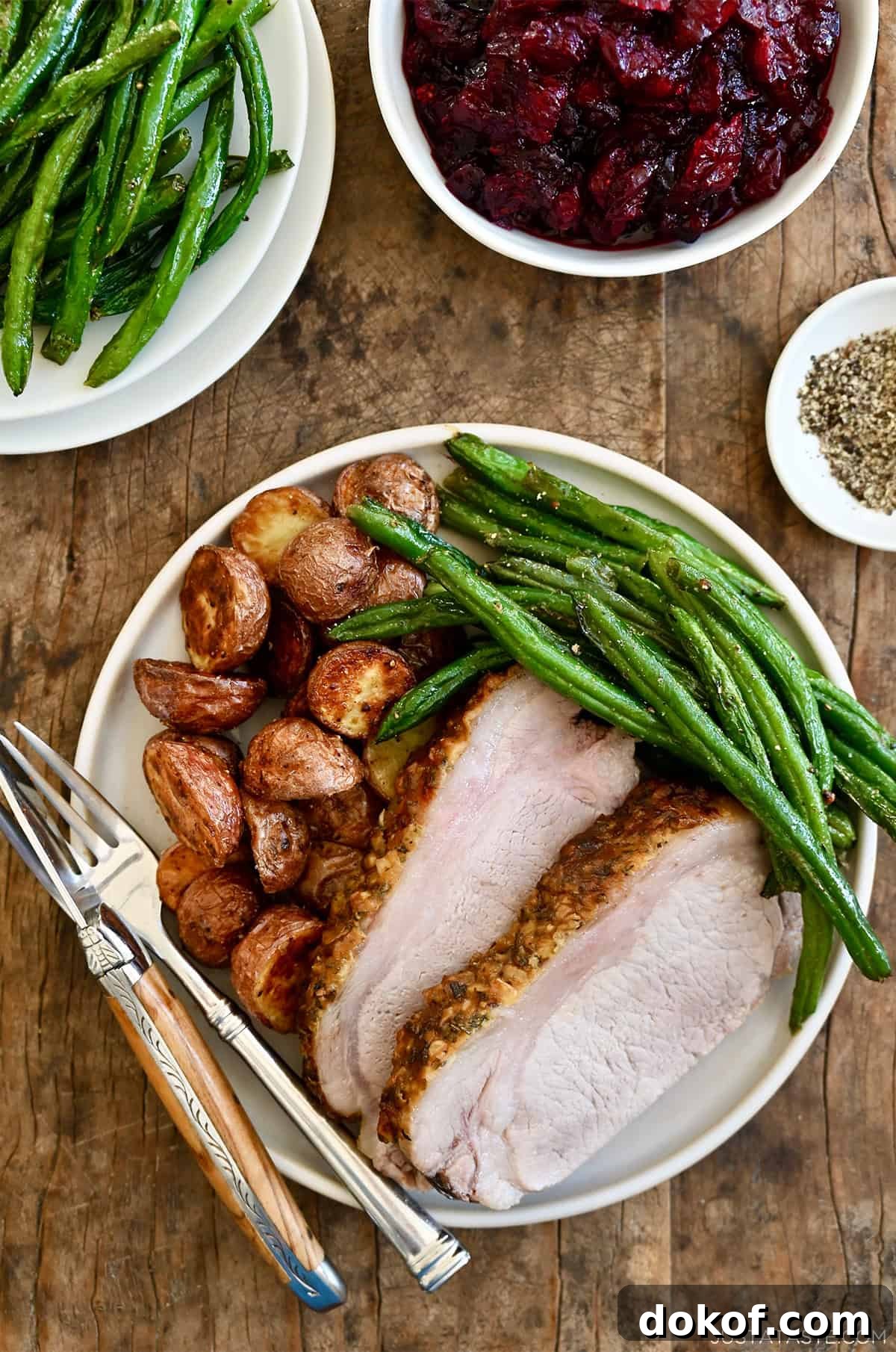
Herb-crusted pork loin roast pairs beautifully with classic comfort-food sides. Roasted potatoes, mashed potatoes, roasted green beans and glazed carrots are all excellent choices. The savory crust and pan juices also work well with simple vegetables because they add richness without needing a heavy sauce.
For a holiday-style meal, serve the pork with stuffing, green bean casserole, mashed sweet potatoes, cranberry sauce, roasted Brussels sprouts or soft dinner rolls. For a lighter dinner, pair it with a crisp salad and roasted vegetables. The flavor of the garlic and herbs is versatile, so this roast can fit into both casual weeknight menus and special occasion meals.
Storage and Reheating Tips
Store leftover roasted pork loin in an airtight container in the refrigerator for up to 3 days. For the best texture, reheat slices gently rather than using high heat. Warm them in a covered skillet with a splash of broth or water, or place them in a covered baking dish in a 300°F oven until heated through.
To freeze leftovers, wrap the pork tightly in plastic wrap and then in foil, or place it in a freezer-safe bag. Freeze for up to 3 months. Thaw overnight in the refrigerator before reheating. Thinly sliced leftovers also make excellent sandwiches with crusty bread and mustard.
Herb-Crusted Pork Loin Roast
Ingredients
- 3 cloves garlic, minced
- 2 teaspoons minced fresh rosemary
- 2 teaspoons minced fresh thyme
- 2 Tablespoons Dijon mustard
- 1 Tablespoon Worcestershire sauce
- 1 Tablespoon extra-virgin olive oil
- 1 (2- to 3-pound) boneless pork loin roast, at room temperature
Instructions
-
Preheat the oven to 425°F.
-
In a small bowl, stir together the garlic, rosemary, thyme, Dijon mustard, Worcestershire sauce, olive oil and ¼ teaspoon black pepper.
-
Pat the roast dry on all sides, then place it in a baking dish with the fat side up.
-
Spread the Dijon herb mixture evenly over the top of the roast. Place it in the oven and roast for 15 minutes.
-
Reduce the oven temperature to 375°F and continue roasting until the pork reaches an internal temperature of 145°F, about 40 to 45 minutes.
-
Remove the roast from the oven, tent it loosely with foil and let it rest for 10 minutes before slicing and serving.
Kelly’s Notes
- A cast-iron skillet or sturdy baking dish helps the roast brown evenly.
- Do not skip the resting time. It helps keep the pork loin juicy when sliced.
- Use an instant-read thermometer for the most accurate results.
- Save the pan drippings for gravy or spoon them over the sliced roast.
- Leftover pork loin is excellent in sandwiches the next day.
Nutrition
Carbohydrates: 1g,
Protein: 34g,
Fat: 9g,
Saturated Fat: 2g,
Cholesterol: 95mg,
Sodium: 166mg