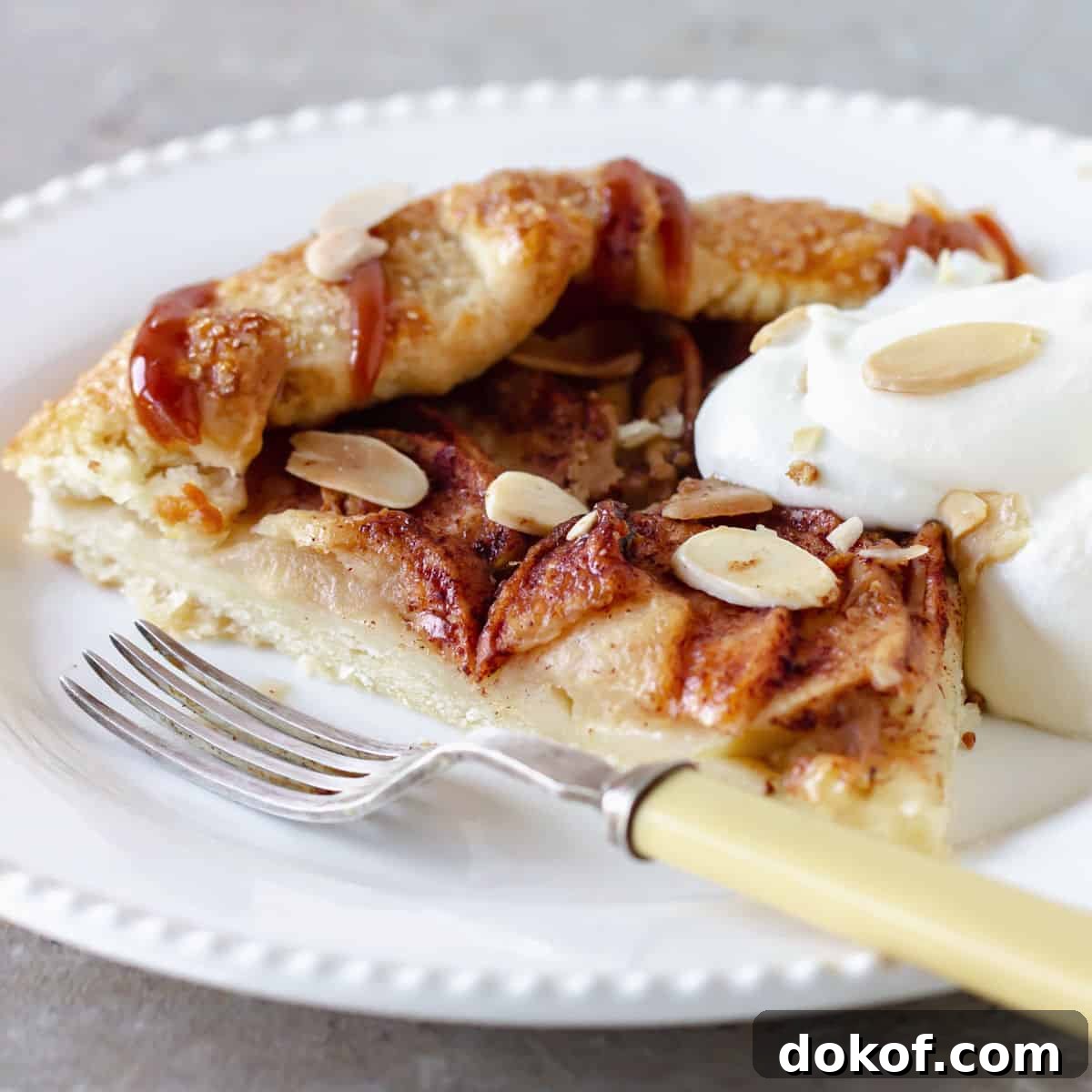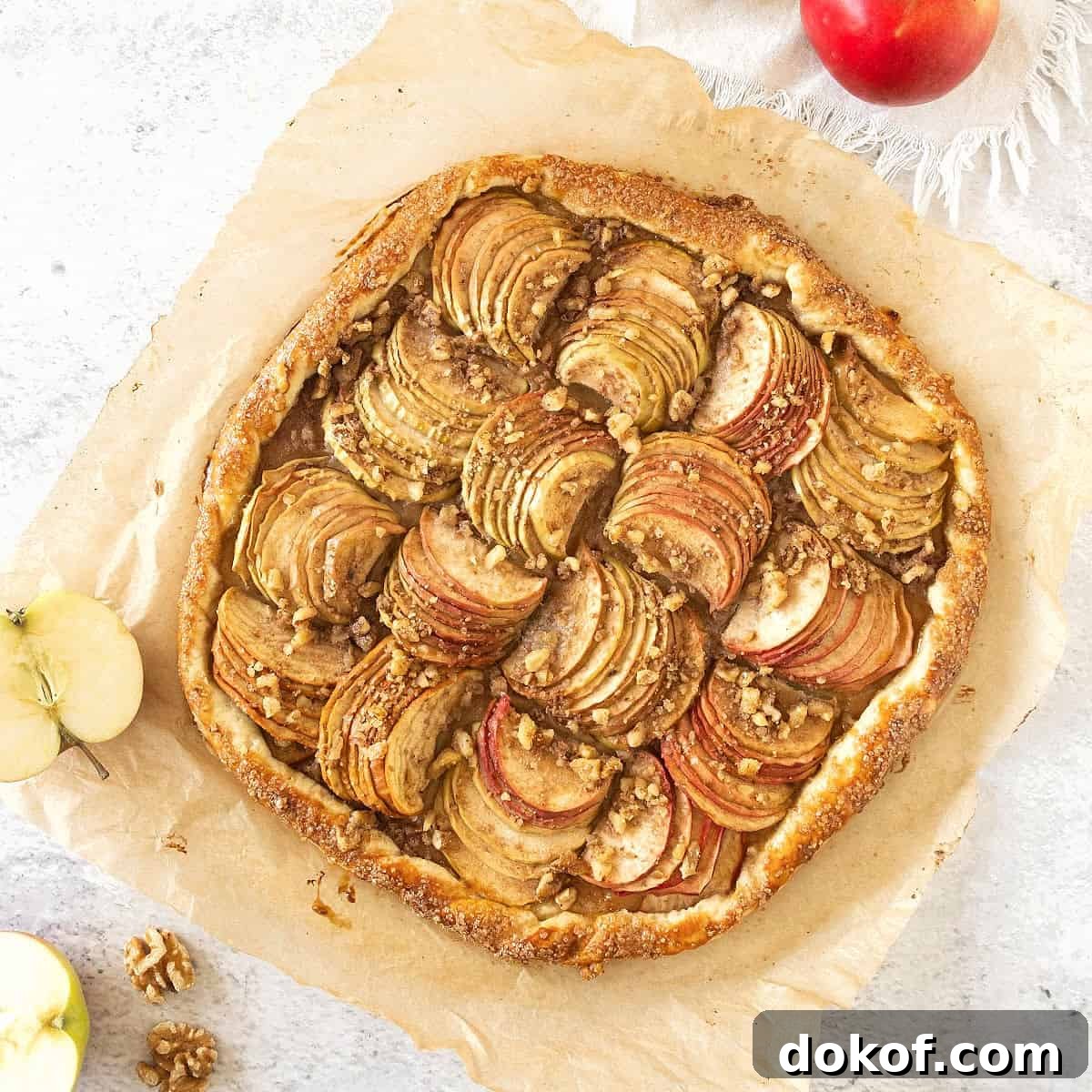
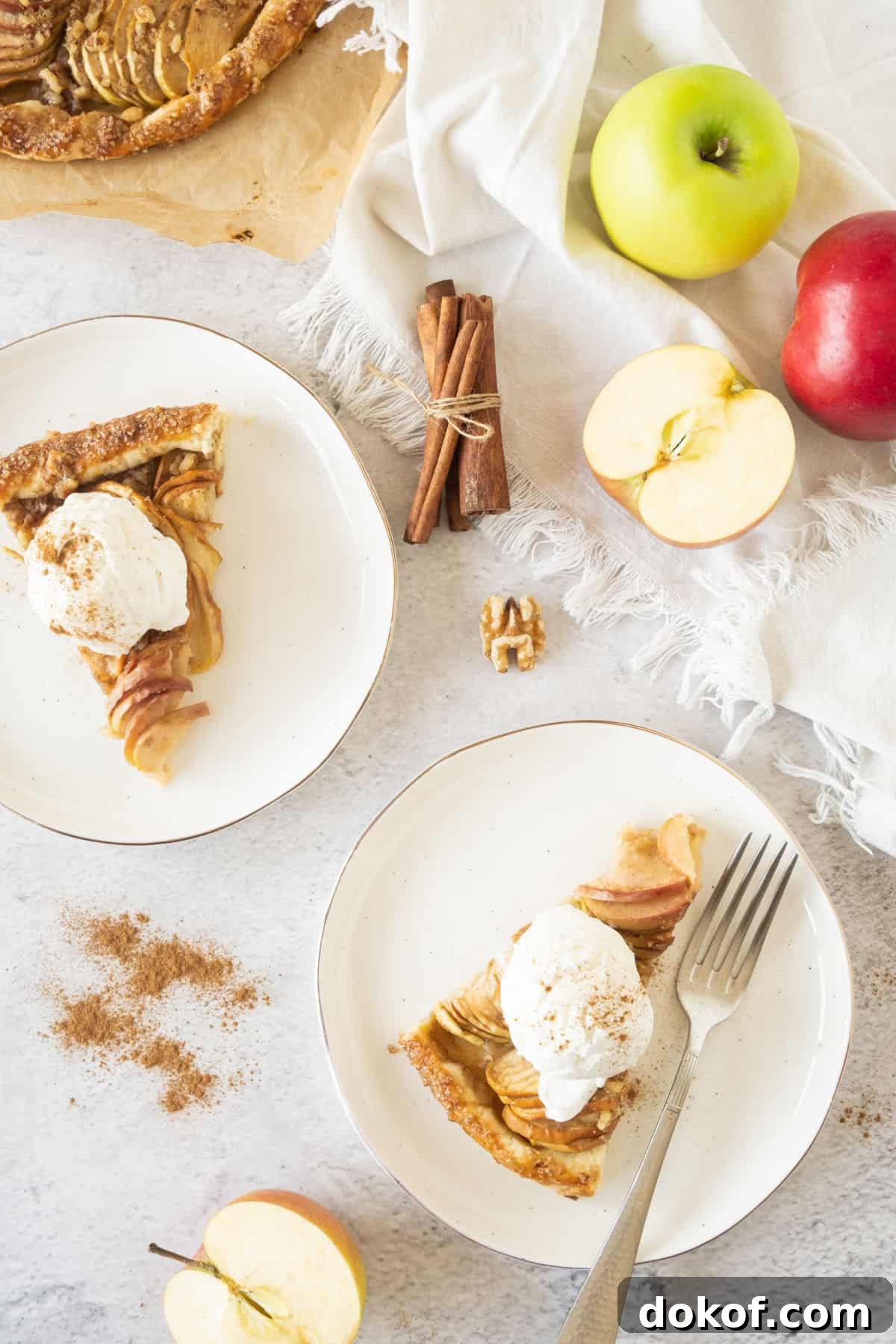
This easy apple galette is a rustic, free-form tart—rolled dough, no pan or crimping—so it looks charmingly homemade while being far simpler than a traditional pie. It’s sweet, flavorful, and perfect when apples are in season.
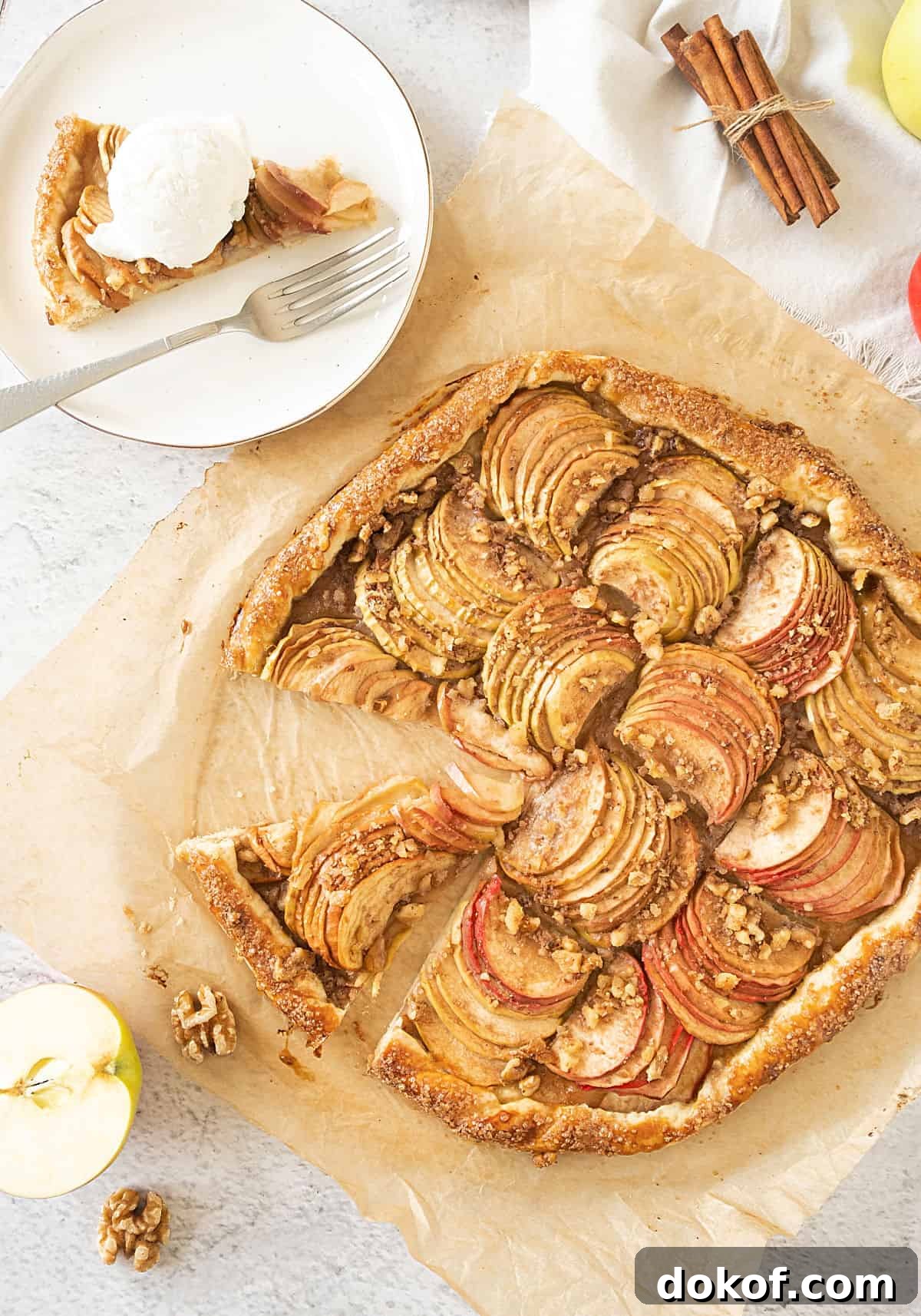
If traditional pies feel intimidating, galettes are a forgiving alternative. They require fewer steps and celebrate the rustic look of French pastry. On this blog we enjoy both sweet galettes—like rustic peach galette—and savory ones such as a tomato galette.
This apple galette is ideal for fall when fresh baking apples are plentiful. It’s quick to assemble, easy to adapt, and a crowd-pleaser for gatherings or weeknight desserts.
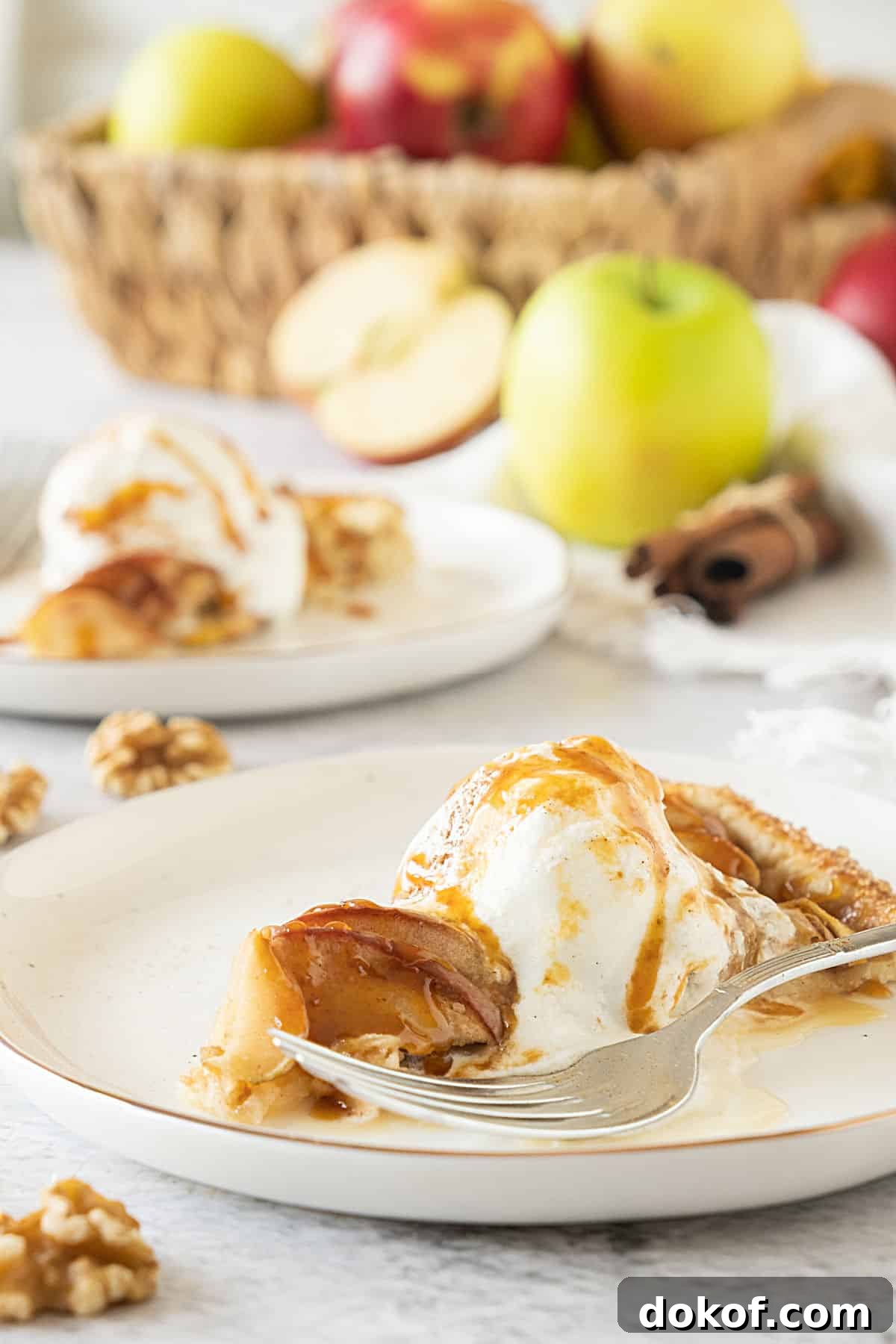
Why make this recipe
Choose this galette when you want an impressive apple dessert without the fuss of a lined pie plate and crimped edges. A few advantages:
- Easy crust: no lining or crimping, no blind-baking required. You simply fold the edges over the filling for a rustic finish.
- Simple filling: the apple mixture needs only a handful of ingredients to taste excellent.
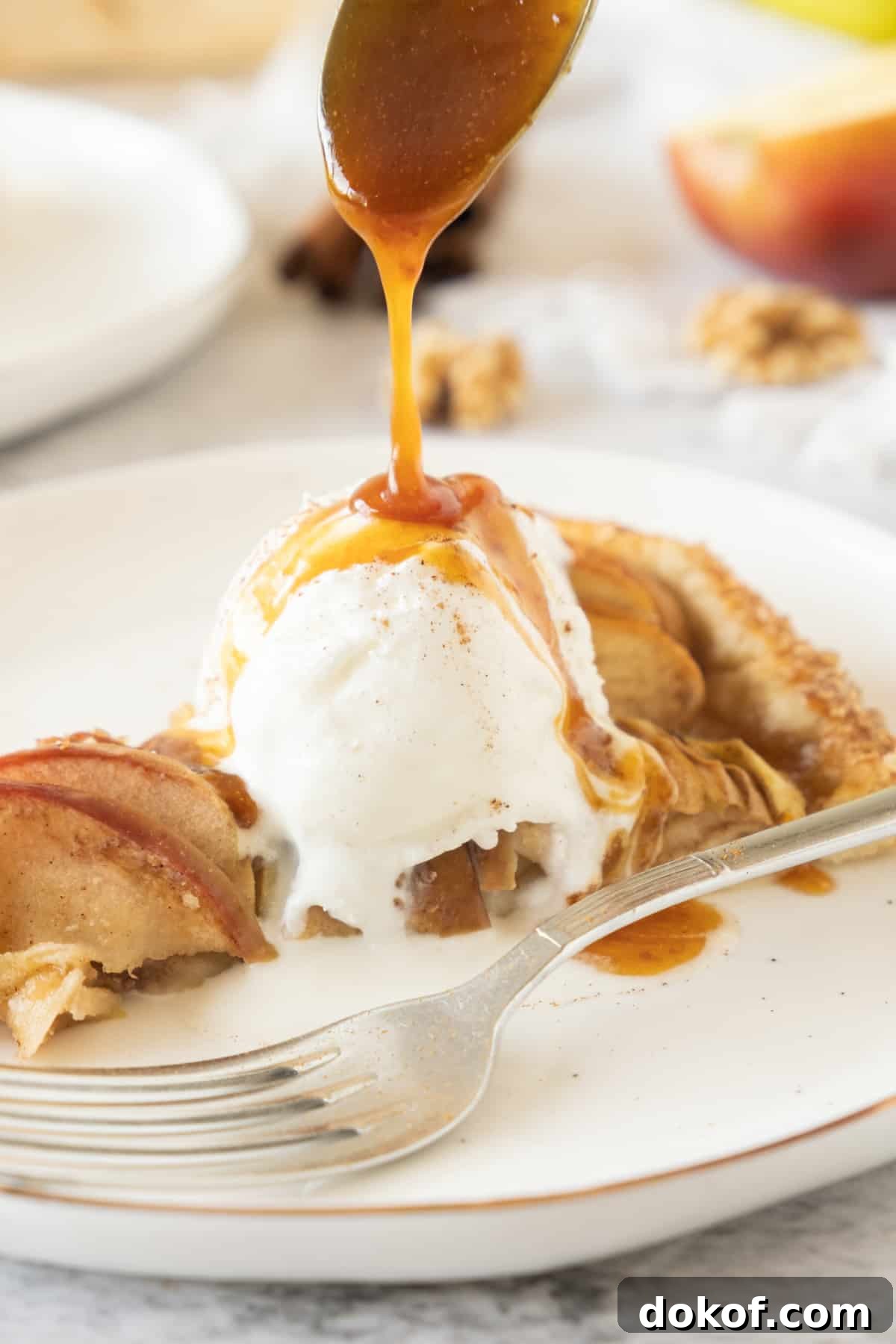
- Crowd pleaser: serve warm with ice cream or caramel for a classic favorite that works for gatherings or weeknight treats.
Ingredient list
- Pie crust: any basic pie dough will work. A flaky, not-too-sweet crust pairs nicely with fruit and caramel.
- Apples: Granny Smith are my go-to for baking, but Honeycrisp, Gala, Fuji, or a mix of varieties also work.
- Cinnamon sugar: white or light brown sugar combined with ground cinnamon.
- Unsalted butter.
- Egg: beaten with a little water to brush the crust.
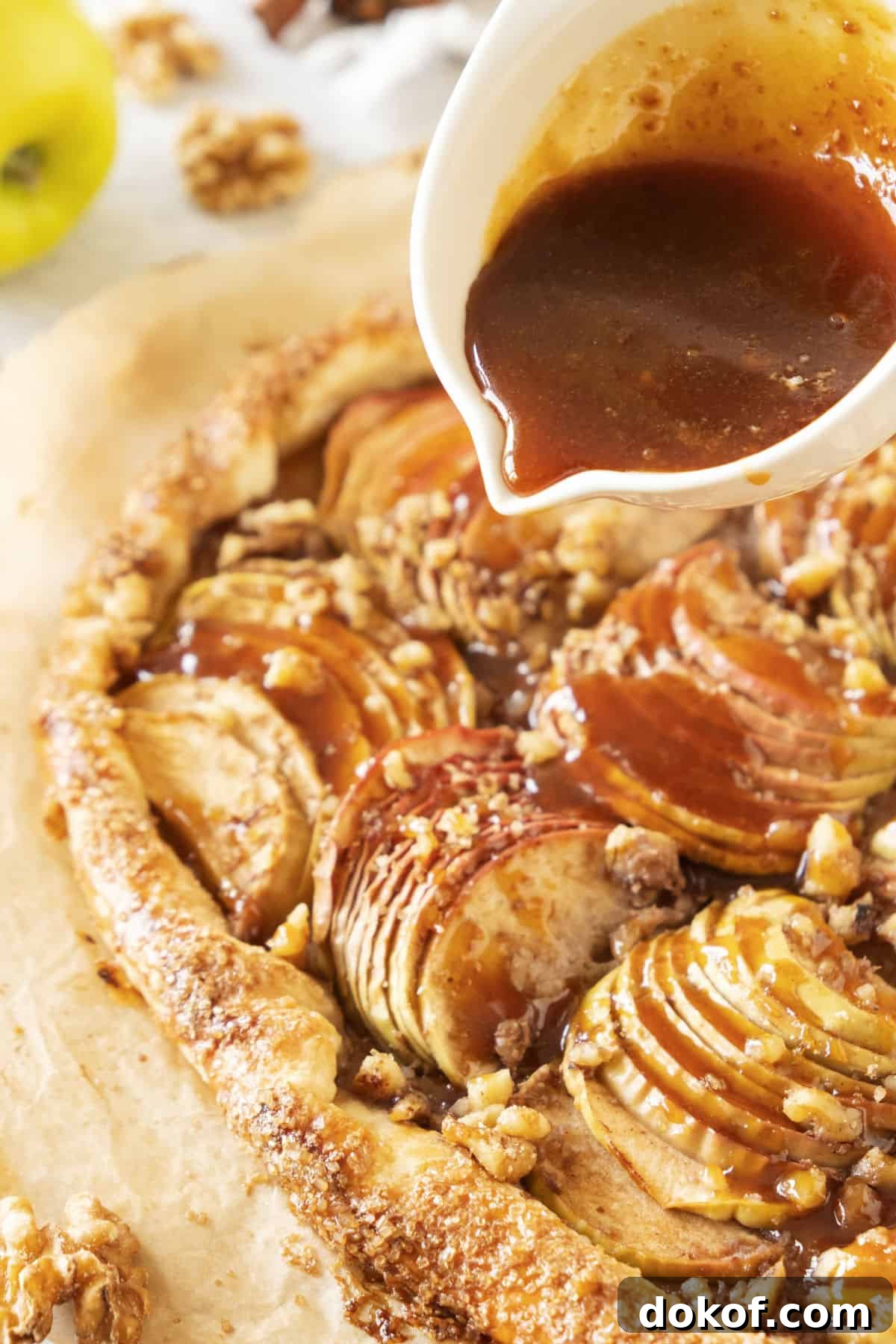
- Caramel sauce or dulce de leche: to drizzle on the finished galette.
- Walnuts or pecans: lightly toasted for a crunchy topping (optional).
Galette crust
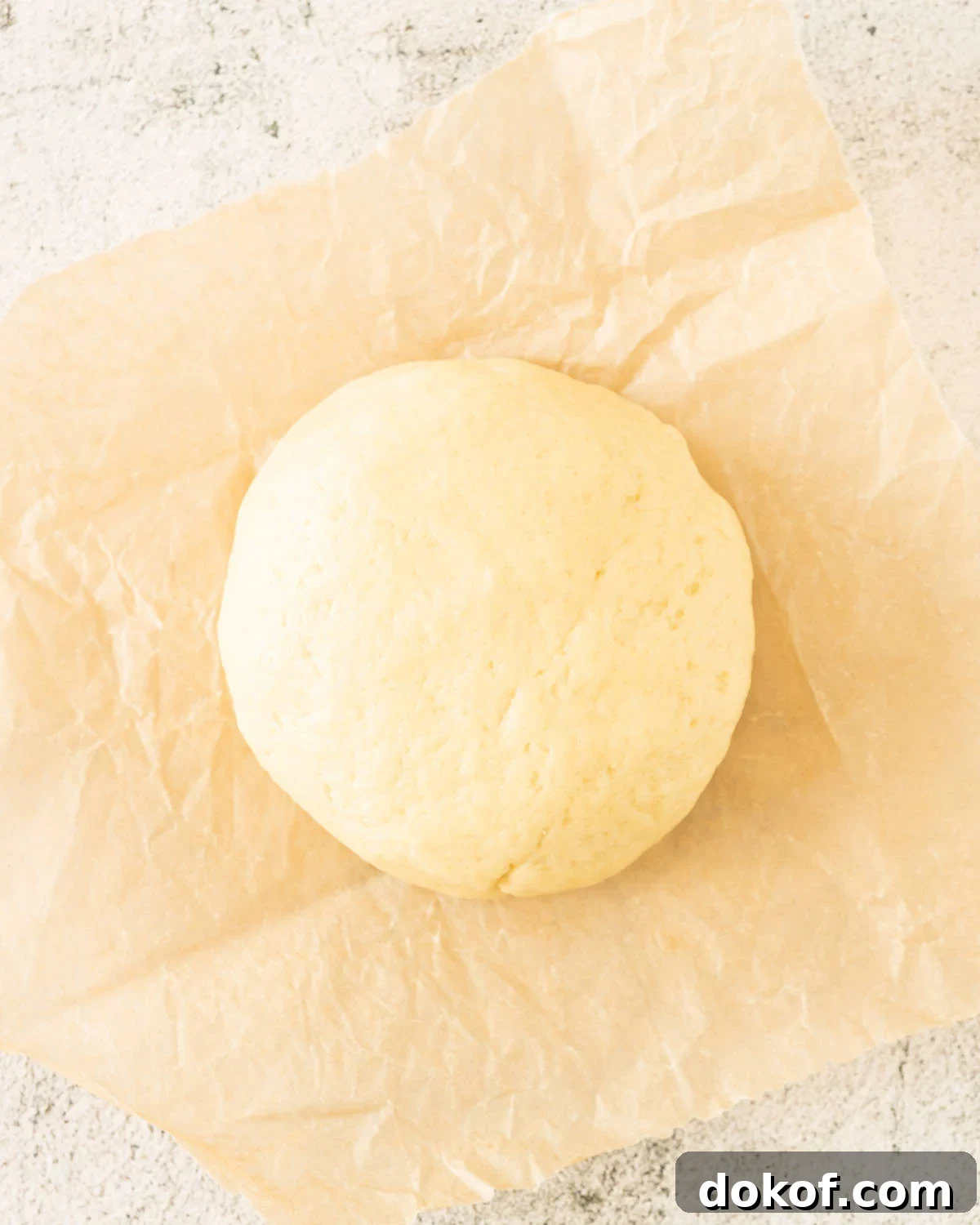
You can use homemade flaky pie crust, a sweet pasta frolla if you prefer a sweeter dough, or store-bought puff pastry for the quickest option. For best results with a store-bought dough, choose one made with butter.
- Flaky pie crust: my preferred choice for a balanced, not-too-sweet base that crisps well.
- Sweet shortcrust/pasta frolla: a good match for richer, sweeter tart fillings.
- Puff pastry: the fastest shortcut—works well and gives a different, flakier texture.
Rolling the dough
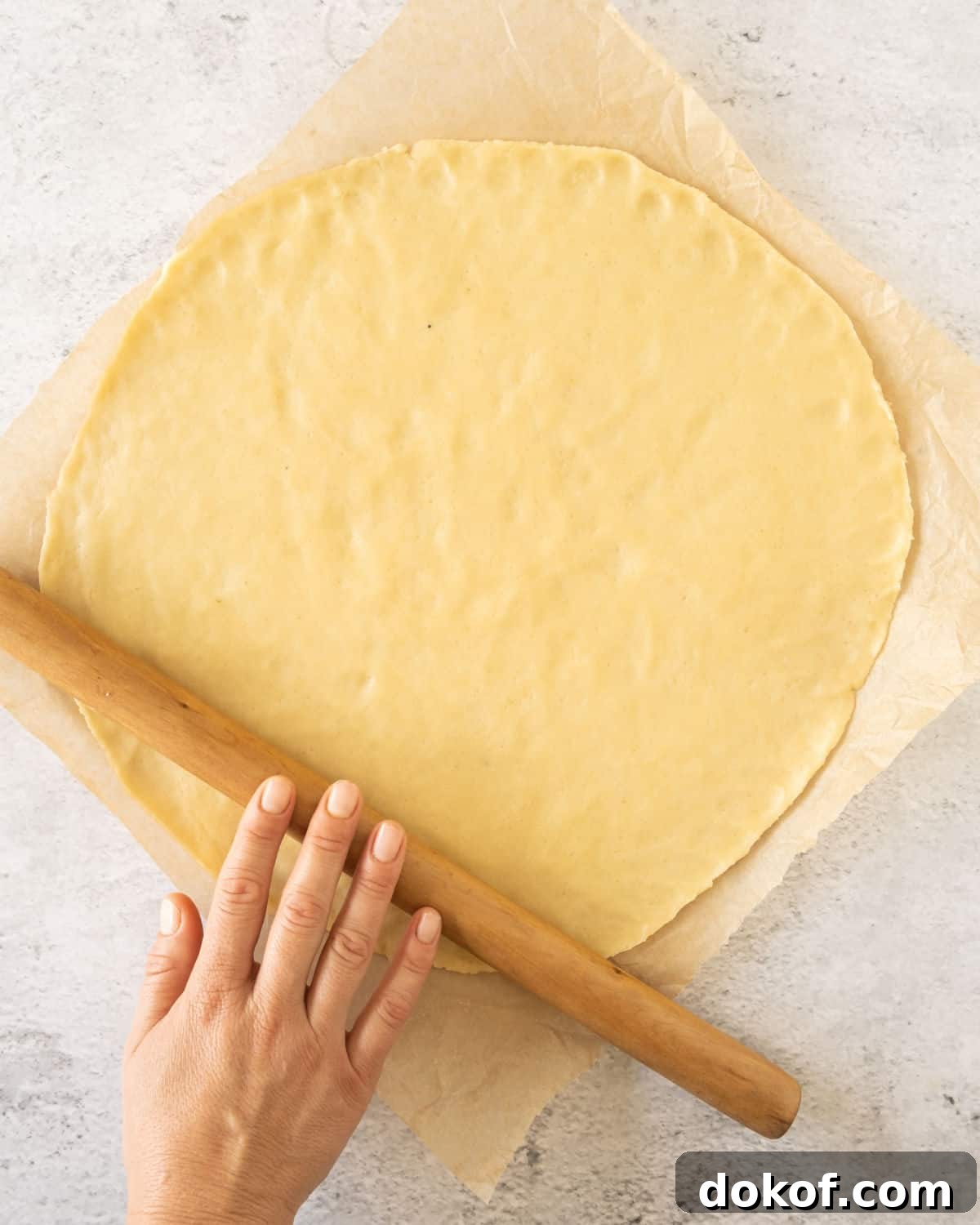
- Keep it cold: cold dough yields the flakiest crust. Work quickly and chill the dough briefly if it softens while rolling.
- Use parchment: roll the dough on a piece of parchment slightly larger than the circle you need; this makes transferring to the baking sheet easy.
- Shape: a perfect circle isn’t necessary—irregular edges are part of the galette’s rustic charm.
The apple filling
Peel, core, and slice the apples. To prevent browning while you work, place the slices in cold water with a squeeze of lemon.
Cinnamon sugar
A simple cinnamon-sugar coating transforms the apples—mix the sugar and cinnamon and toss gently so the slices are evenly coated without breaking.
Types of apples:
- Granny Smith: tart, firm, and hold their shape—ideal for baking.
- Other baking apples: Fuji, Gala, Honeycrisp, and Pink Lady are sweeter and can be used alone or mixed for more complex flavor and texture.
- Mixing varieties: combining apples gives a balance of sweetness, acidity, and texture.
Cutting and arranging the apples
- Slice thickness: thin slices bake softer and may need multiple layers; thicker slices bake to tender-but-slightly-crisp and usually work well in a single layer.
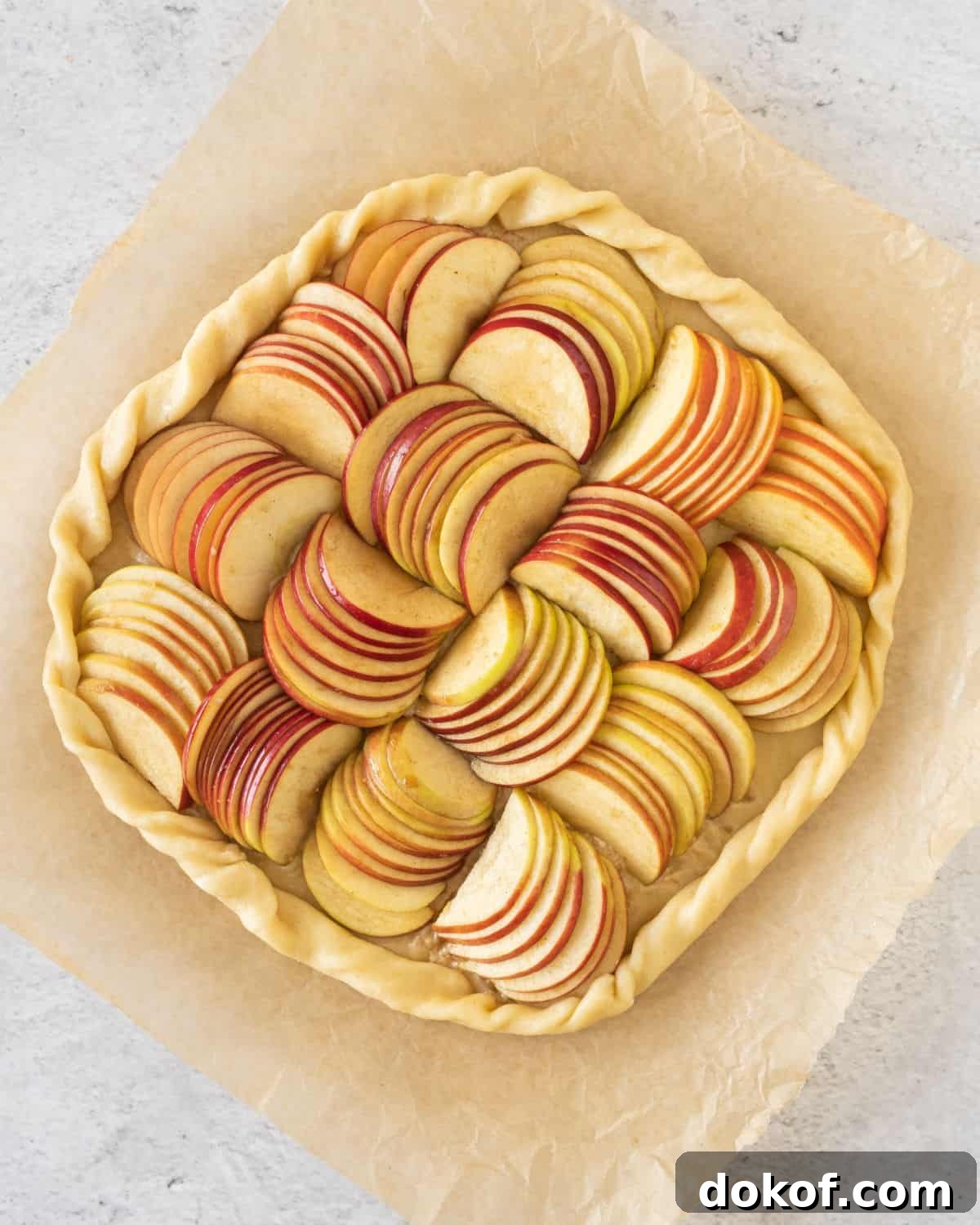
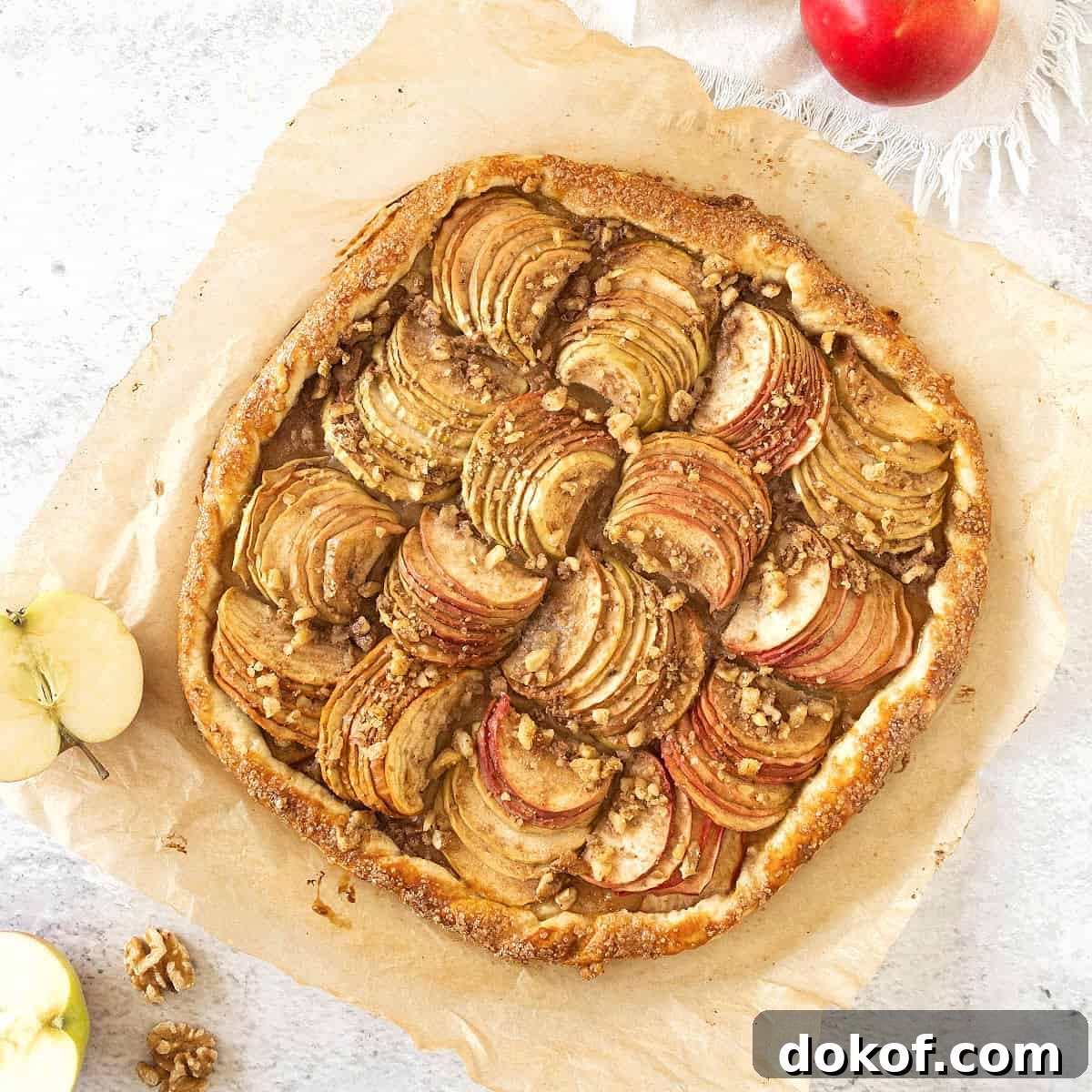
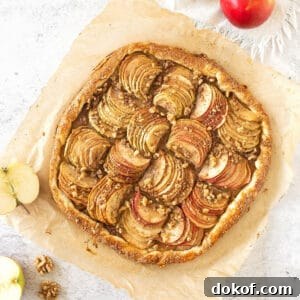
- Arrangement: arrange apples in overlapping concentric circles, rows, or mounded piles—keep the layer even so it bakes uniformly.
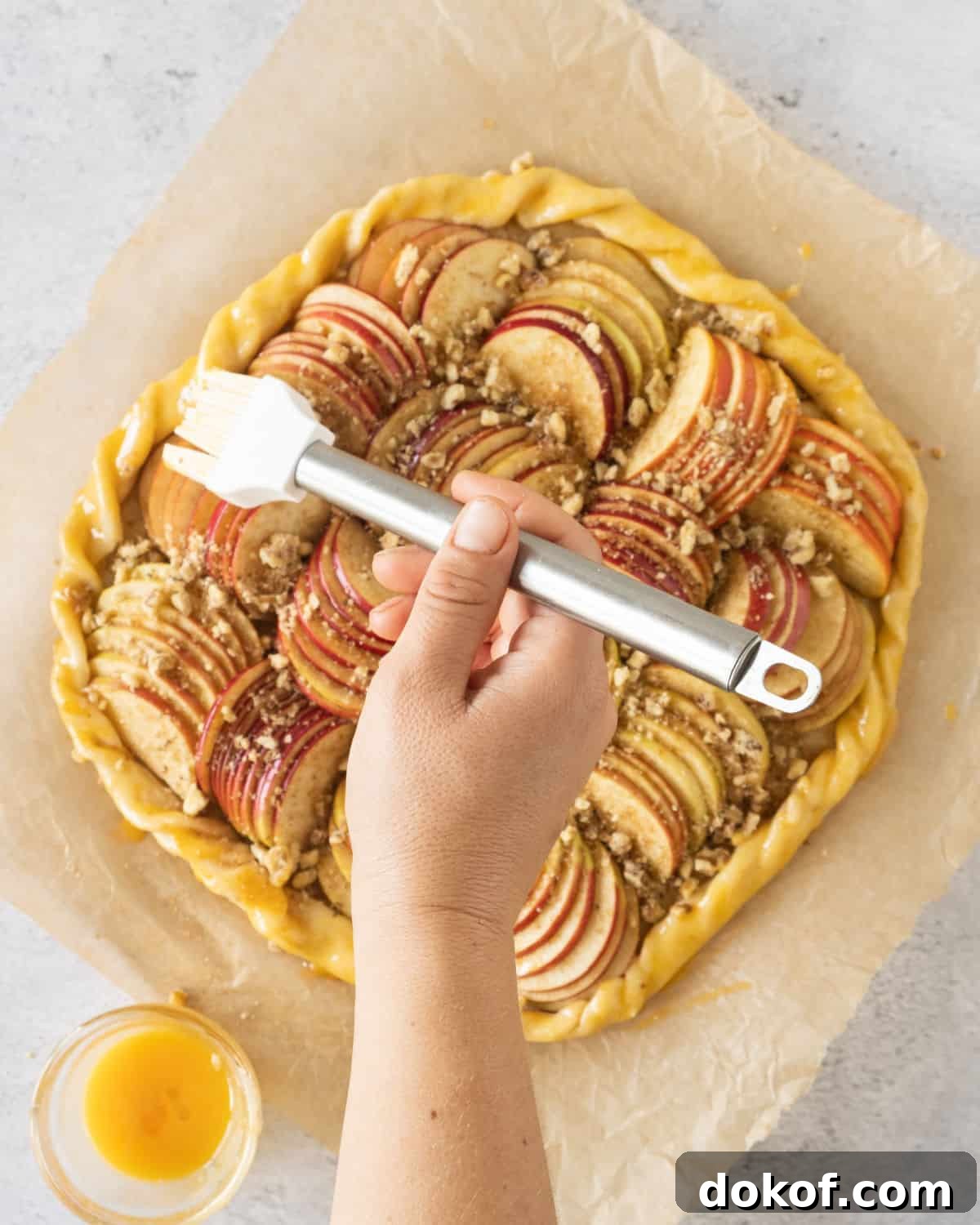
The egg wash
Brush the folded crust edges with an egg mixed with a little water or milk, then sprinkle a bit of sugar. This adds shine, color, and a slight crunch to the crust. It’s optional but attractive.
Serving it
Serve the galette in several ways:
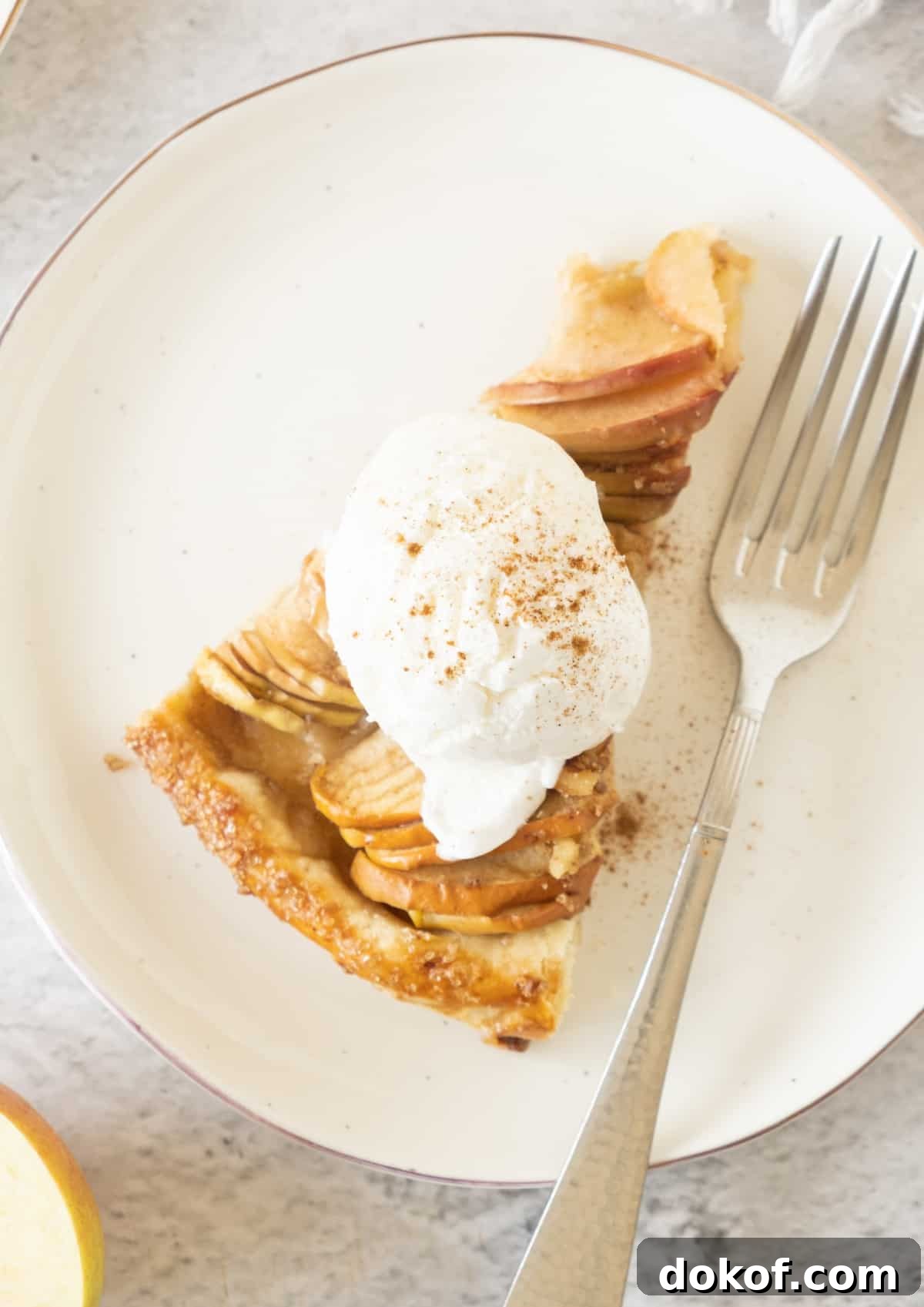
- A la mode: warm with a scoop of vanilla ice cream.
- With caramel: a drizzle of caramel or dulce de leche and a dollop of whipped cream makes it extra indulgent.
- Plain: room temperature, for a simpler presentation.
Kitchen notes
- Organization: read the recipe through first and have ingredients and equipment ready—this streamlines the process.
- Baking time: ovens vary. The times here are a guideline—watch for a golden crust and tender apples and adjust for your oven.
- Cold dough: keep the crust cold to prevent sogginess and promote flakiness.
- Store-bought dough: puff pastry or a pre-rolled pie crust works well if you’re short on time.
- Apples: tart apples like Granny Smith balance sweet toppings; sweeter varieties will yield a sweeter tart.
- Glaze: optional—brushing apricot jam on the galette after baking adds shine.
A galette is a flat, rustic, free-form tart baked without a pie pan; dough is rolled, filled, and folded, then baked on parchment or a sheet pan.
Galette is the French term and crostata the Italian term for a free-form pie; they are largely interchangeable, though crostata can also refer to jam-filled lattice tarts in Italian baking.
Baking apples like Granny Smith, Gala, Fuji, and Honeycrisp work well. Granny Smith stays firm and adds pleasant tartness, which balances toppings like caramel or ice cream.
Yes—classic pie doughs, sweet shortcrust, or pasta frolla all work for galettes, depending on whether you want a flakier or sweeter crust.
Keep the dough cold, assemble quickly, and bake immediately so fruit juices don’t soak the crust. You can also sprinkle ground almonds or cookie crumbs on the crust before adding fruit to absorb excess liquid.
Related recipes you might like:
-
Caramel Apple Dump Cake
-
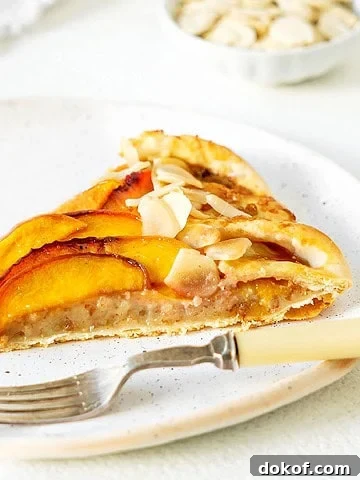
Peach Galette (rustic tart)
-
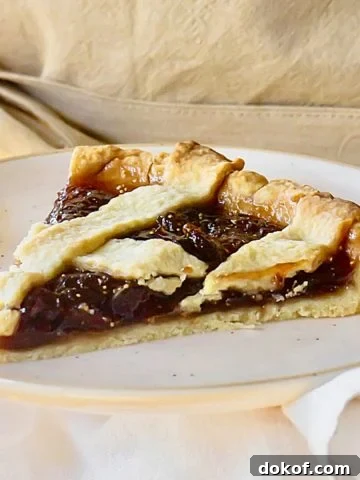
Fig Tart (Italian crostata)
-
Apple Bread Pudding (15-minute soak)


If you made this recipe and loved it, leave a comment and a rating. If you had issues, let me know so we can troubleshoot together. You can also subscribe to the newsletter for more baking tips and recipes.
Easy Apple Galette (rustic tart)
Ingredients
- 1 recipe for flaky pie crust
- 3–4 Granny Smith apples
- 3–4 tablespoons sugar (white or brown)
- 1/2 teaspoon ground cinnamon
- 1 egg
- 2 tablespoons chopped walnuts or pecans
- 1/2 cup caramel sauce or dulce de leche
Instructions
- Preheat the oven to 350°F (180°C).
- Peel, core, and slice apples about 1/4-inch thick. If you’re prepping in batches, keep slices in cold water with lemon to prevent browning.
- Roll out cold pie dough on a lightly floured surface to about 1/8–1/4 inch thick, using parchment to make transfer easy.
- Place the rolled dough on a baking sheet lined with parchment and chill briefly while you prepare the filling.
- Toss apple slices lightly with sugar and cinnamon until coated but not broken.
- Leave a 2–3 inch border of dough and arrange apples in concentric circles or mounds so the surface is covered. If apples released liquid, strain and reserve the liquid.
- Sprinkle chopped nuts over the apples.
- Fold the dough edges inward over the apples, leaving the center exposed.
- Mix the egg with a tablespoon of water and brush the folded edges; sprinkle a little extra sugar over the crust.
- If you reserved apple liquid, drizzle a little on top of the apples.
- Bake immediately for about 40 minutes, until apples are tender and the crust is golden.
- Cool on a wire rack about 10 minutes before transferring. Serve warm with caramel or dulce de leche and ice cream or whipped cream.
- Store leftovers at room temperature for one day or refrigerated for a few days, covered.
Notes
Organization: read the recipe first and have ingredients and equipment ready.
Baking time: oven temperatures vary—use visual cues: a golden crust and tender apples.
Cold pie crust: keeping the dough cold prevents sogginess and improves flakiness.
Purchased dough: store-bought flaky pie crust or puff pastry works well if you’re short on time.
Apple slices: thin slices bake softer and may require layers; thicker slices bake tender but retain a bit of crunch.
Let me know in the comments below!