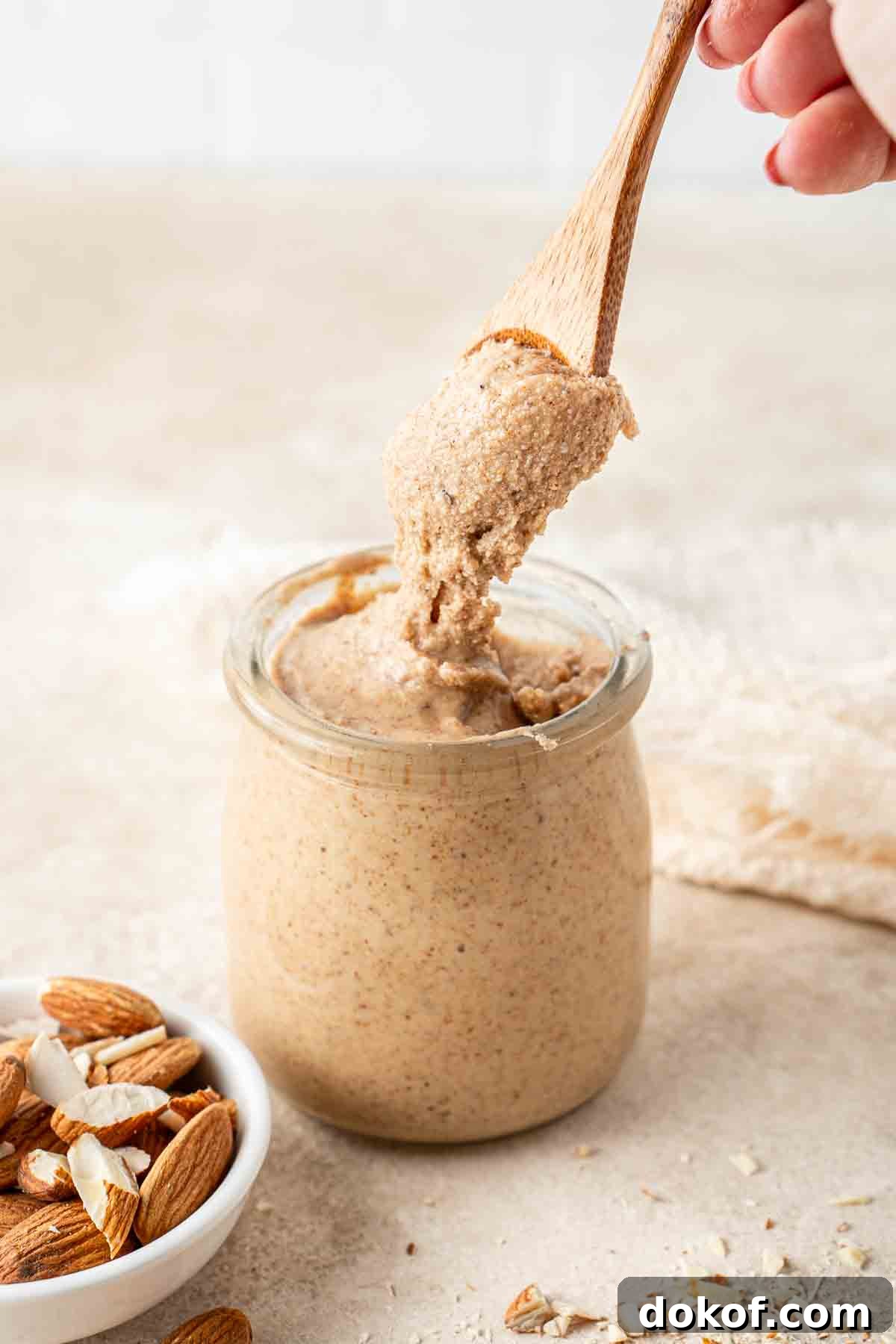
Homemade almond butter is nutritious, delicious, and far more affordable than store-bought jars. It’s remarkably simple to prepare at home — all you need is a food processor and good-quality almonds.
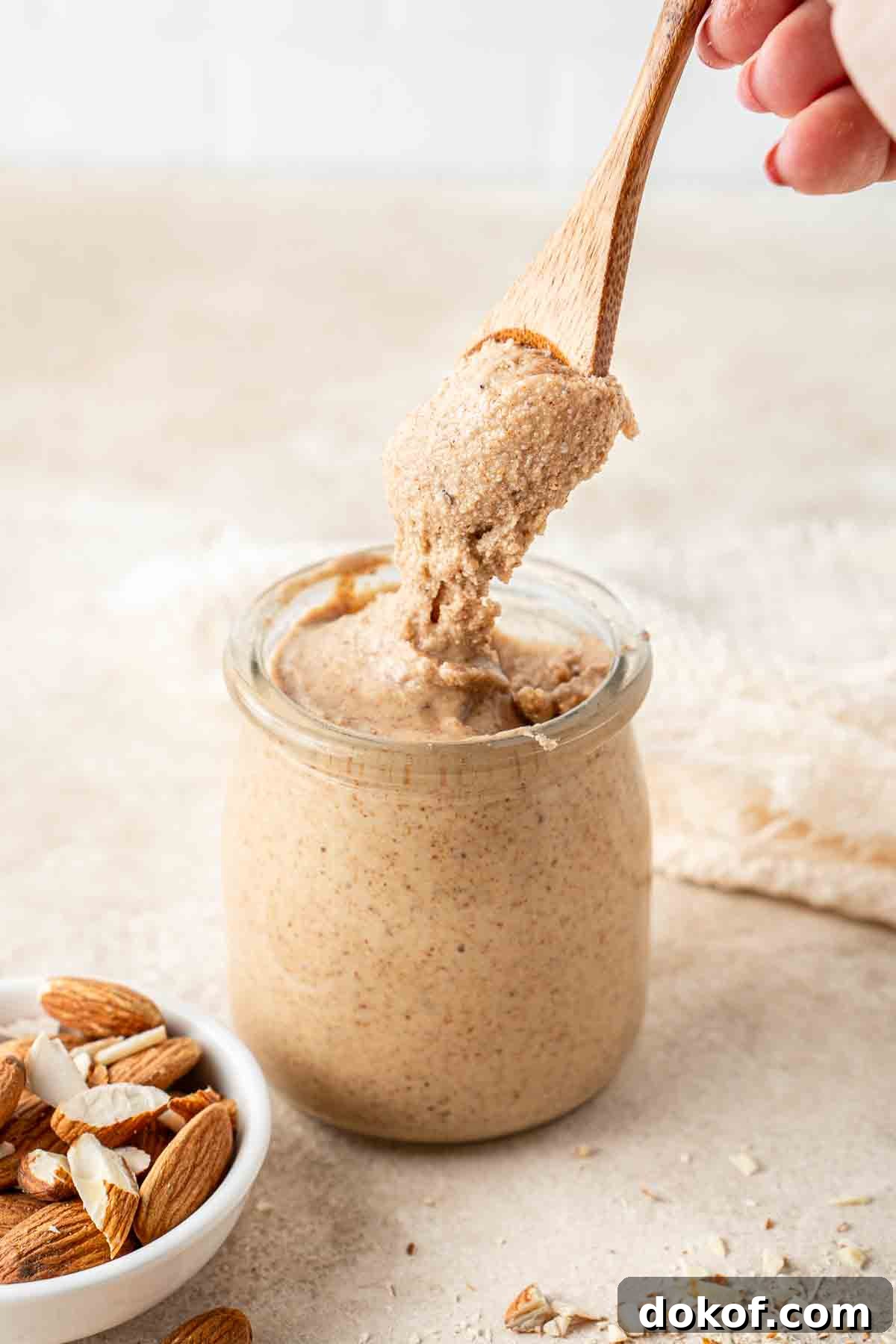
Almond butter makes a healthy snack or ingredient: spread it on banana or apple slices, stir a spoonful into smoothies for extra protein, or simply enjoy it by the spoonful. Making it yourself gives you full control over ingredients and flavor, and the result is usually creamier and fresher than many commercial brands.
This recipe uses just almonds and an optional pinch of sea salt. Some versions add oil to help the almonds break down, but roasting the nuts first releases their natural oils, letting them blend into a smooth butter without added fats.
Considering how little it takes to make a jar at home, it’s easy to see why making almond butter yourself is both economical and satisfying.
Key Ingredients
You only need one primary ingredient and one optional seasoning to make great almond butter:
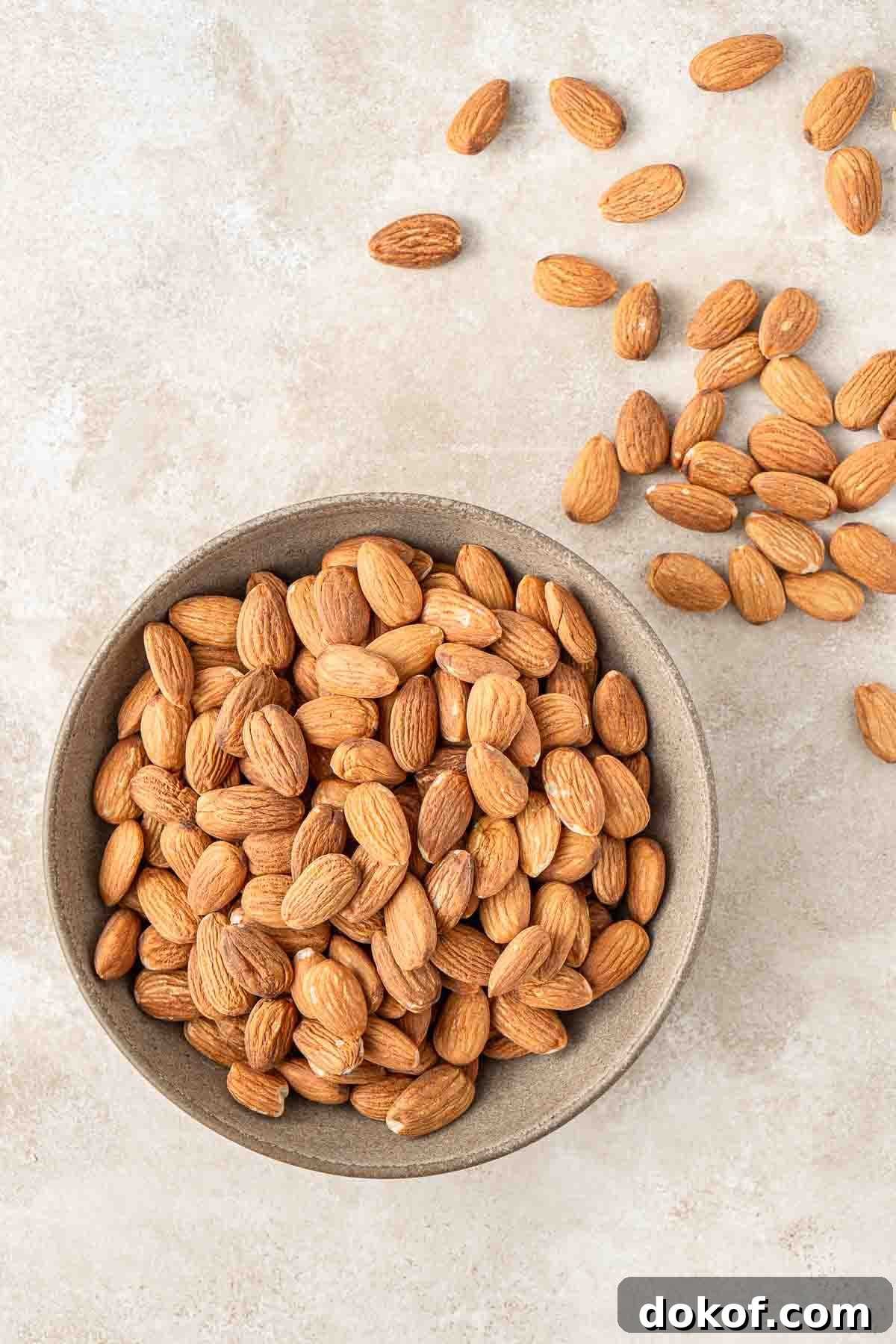
Quantities are shown in the recipe card below.
- Almonds – use raw, whole almonds for the best flavor and texture.
- Sea salt – optional, a pinch enhances the flavor.
Step-By-Step Instructions
A food processor is ideal for making almond butter. A high-powered blender can also work, but results may vary depending on the model.
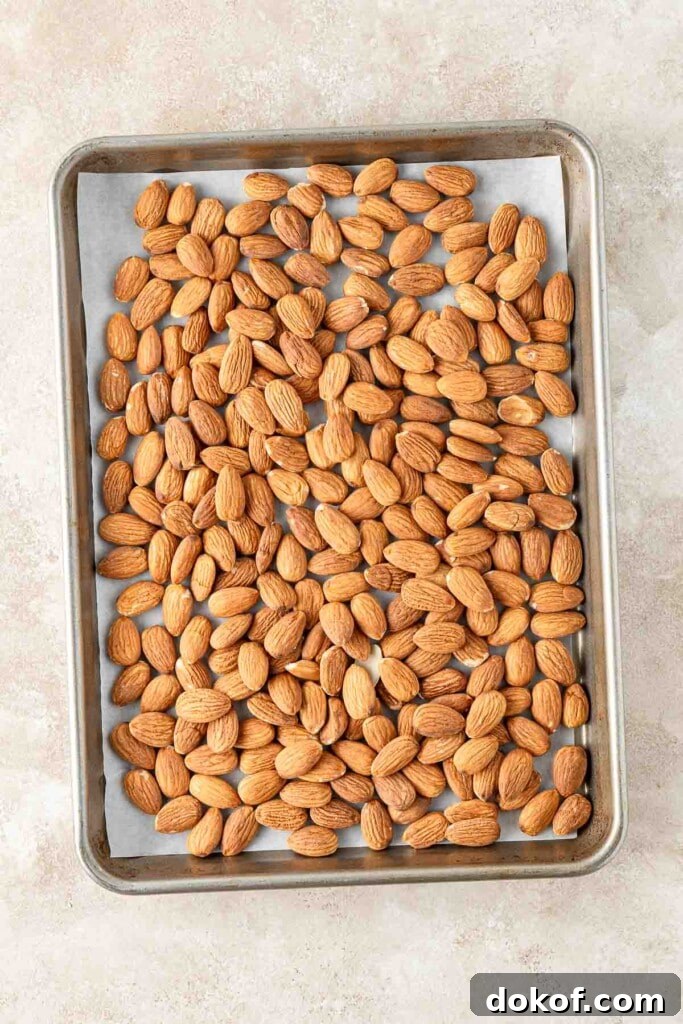
Start by roasting the almonds. Roasting deepens the flavor, warms the nuts so their oils are released, and makes them easier to process.
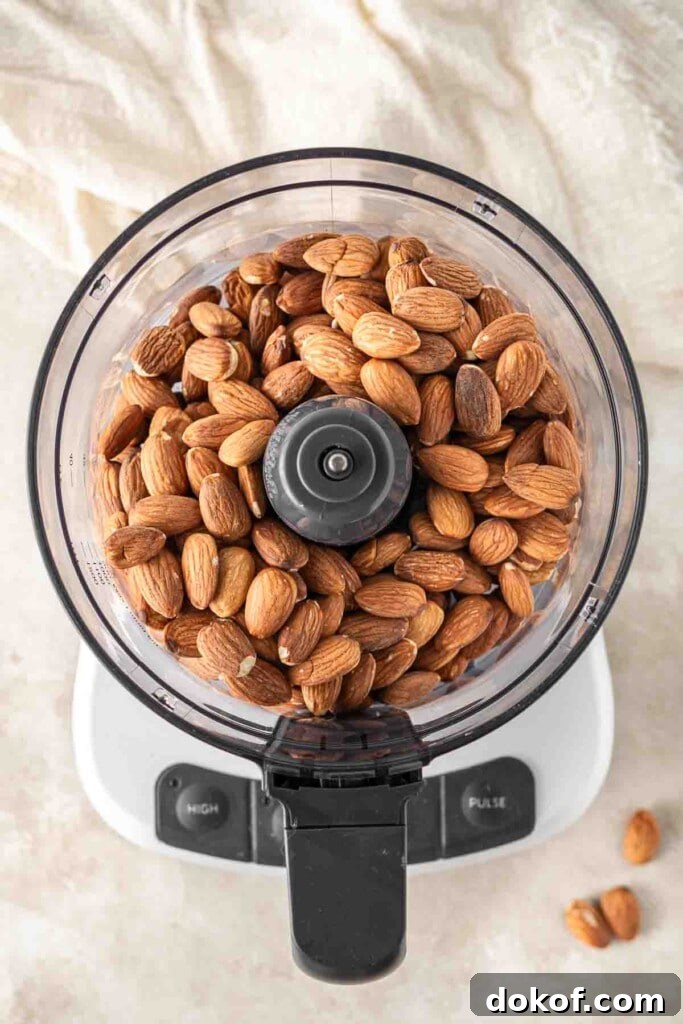
While the almonds are still warm, transfer them to your food processor and pulse on low to begin breaking them down. They will first turn into a coarse almond meal and may stick to the sides. Stop the processor occasionally and scrape down the bowl so everything processes evenly.
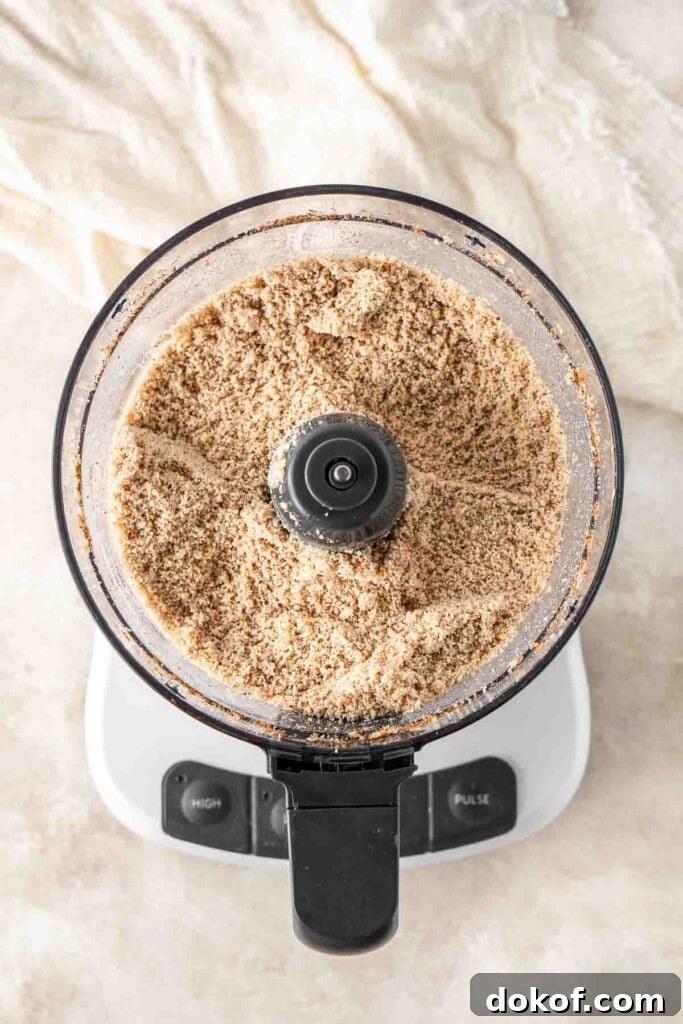
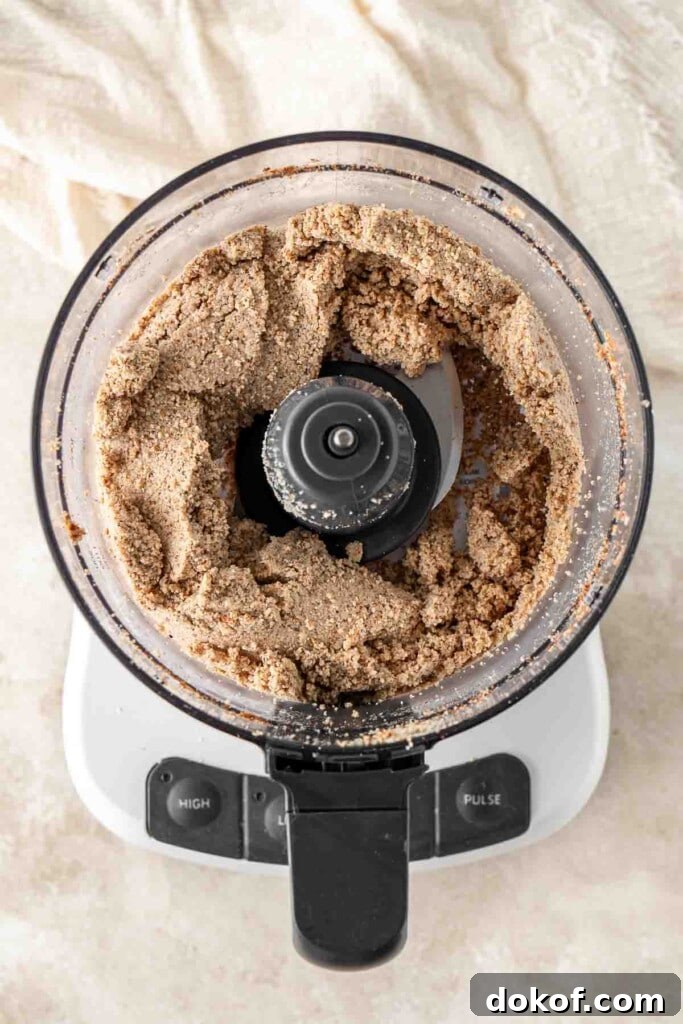
The total processing time depends on your machine. With many food processors it takes around 20 minutes of intermittent processing and scraping until a glossy, spreadable almond butter forms. The change is gradual and often feels like it will never happen — then suddenly the mixture smooths out into a silky paste.
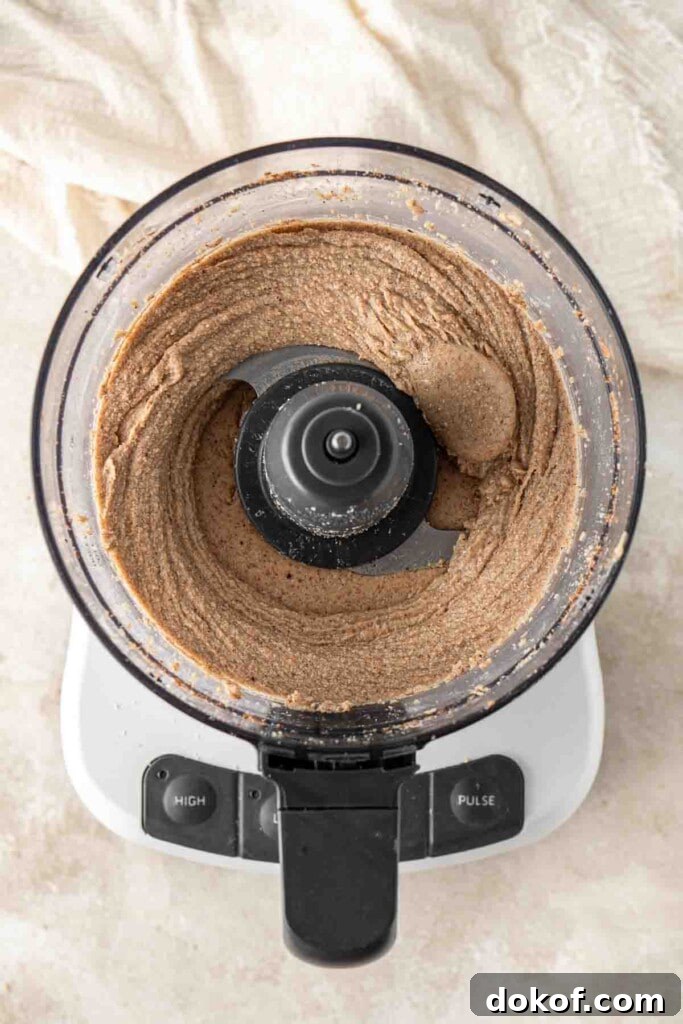
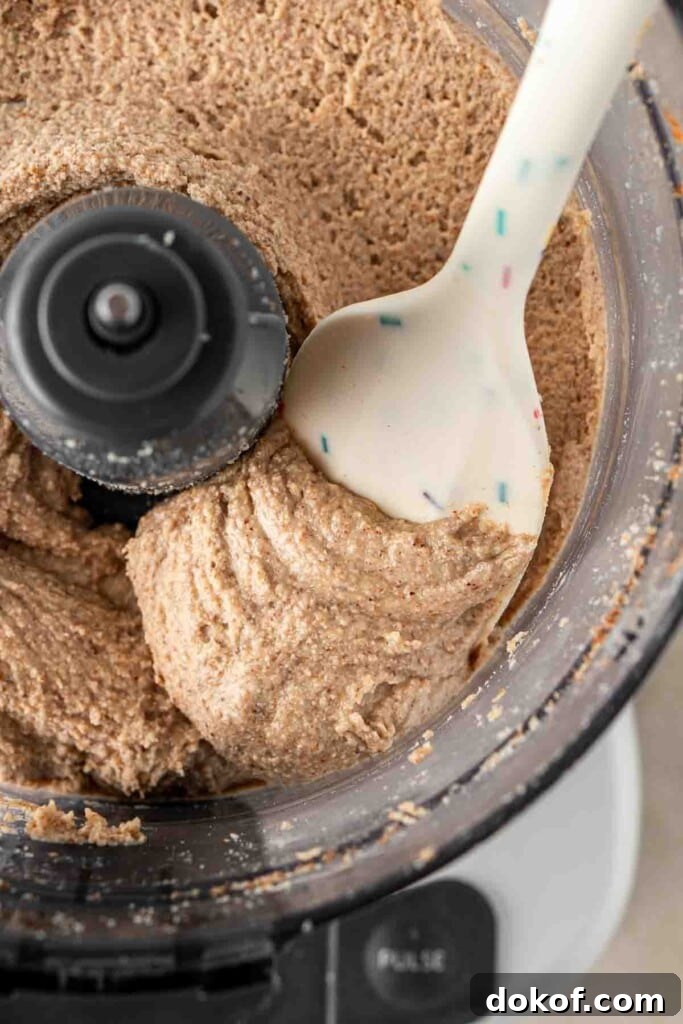
When the almond butter is smooth and spreadable, scrape it into a jar and refrigerate. Properly stored, it will keep for about 2–3 weeks.
Tips for making almond butter
- Be patient — almonds will go from crumbly to creamy; it just takes time and periodic scraping.
- Buy raw almonds and roast them yourself. They’re usually cheaper and roasting releases natural oils for easier blending.
- Use a sturdy, high-powered food processor. Continuous processing can warm the motor; if it feels hot, pause to let it cool before continuing.
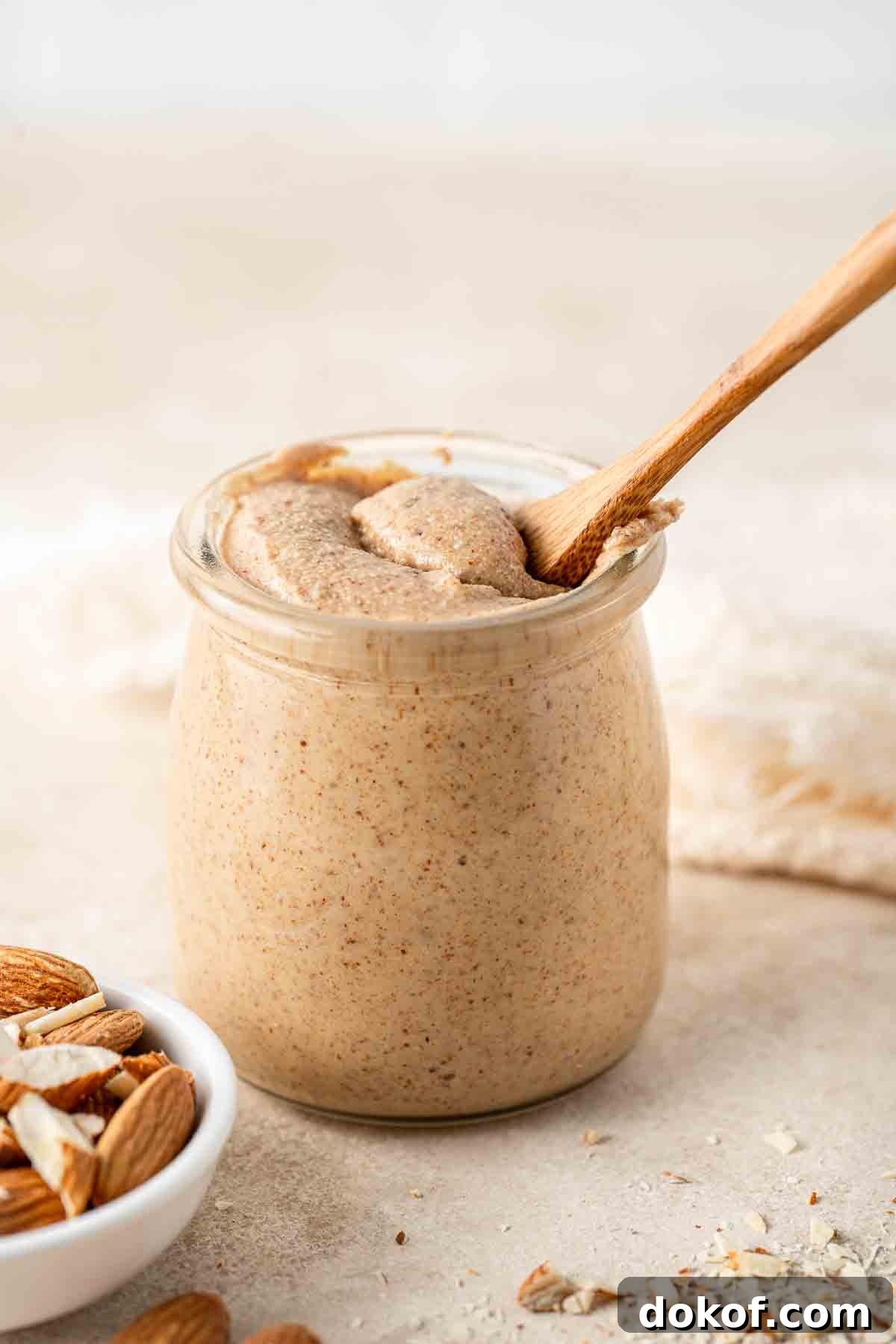
How to use almond butter
Almond butter is versatile and can usually replace peanut butter in recipes. Ideas for using it:
- Blend a spoonful into smoothies or use as a topping for smoothie bowls.
- Serve with sliced apples or bananas for a nutritious snack.
- Drizzle over oats or stir into porridge for extra creaminess and protein.
- Use in baking as a substitute for other nut butters in many recipes.
And of course, it’s perfectly enjoyable straight from the jar with a spoon.
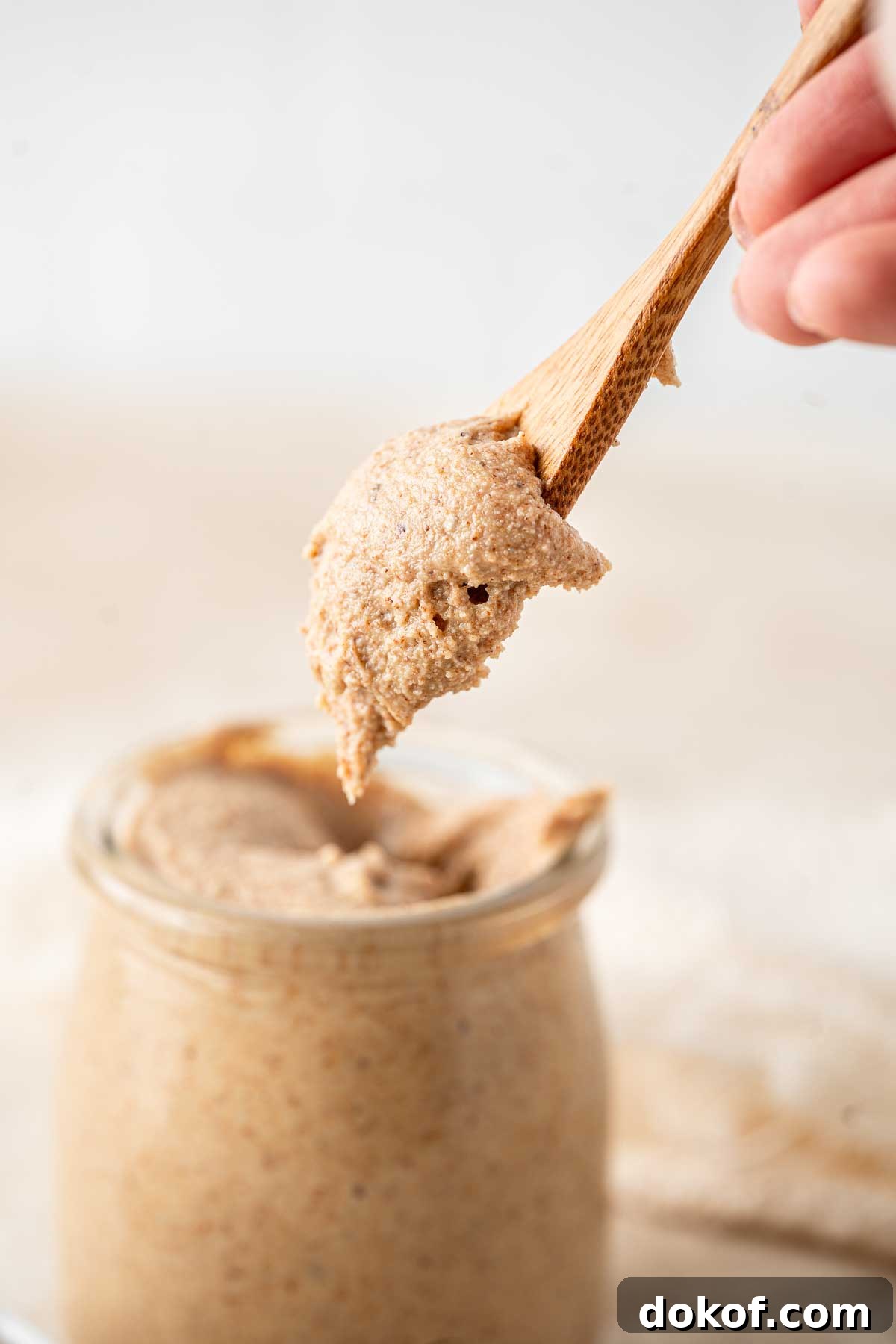
If you make this recipe, please leave a comment and a rating below — I’d love to know how it turned out!
More dips and sauces:
Easy Peanut Sauce
Lemony Garlic Sauce (Whole30, Dairy-free)
Easy Enchilada Sauce
Homemade Vegan Basil Pesto
How to Make Almond Butter
Ingredients
- 2 cups raw almonds
- pinch salt optional
Instructions
-
Place almonds on a baking sheet and bake in a preheated oven at 180°C (350°F) for about 10 minutes, or until they begin to darken and smell toasted.
-
Transfer hot almonds to a food processor and pulse until they break down into crumbs.
-
Scrape down the sides of the processor whenever the mixture clings to the bowl, then continue processing.
-
Keep processing and scraping until the mixture forms a thick paste and eventually becomes smooth; this can take around 20 minutes depending on your machine.
-
The almond butter is done when it is silky, smooth, and spreadable.
-
Spoon into a jar and store in the refrigerator for 2–3 weeks.
Nutrition
Nutritional information is a guide only and may vary based on ingredients used.
This post was originally published in May 2017 and has been updated with new photos and text; the recipe remains the same.