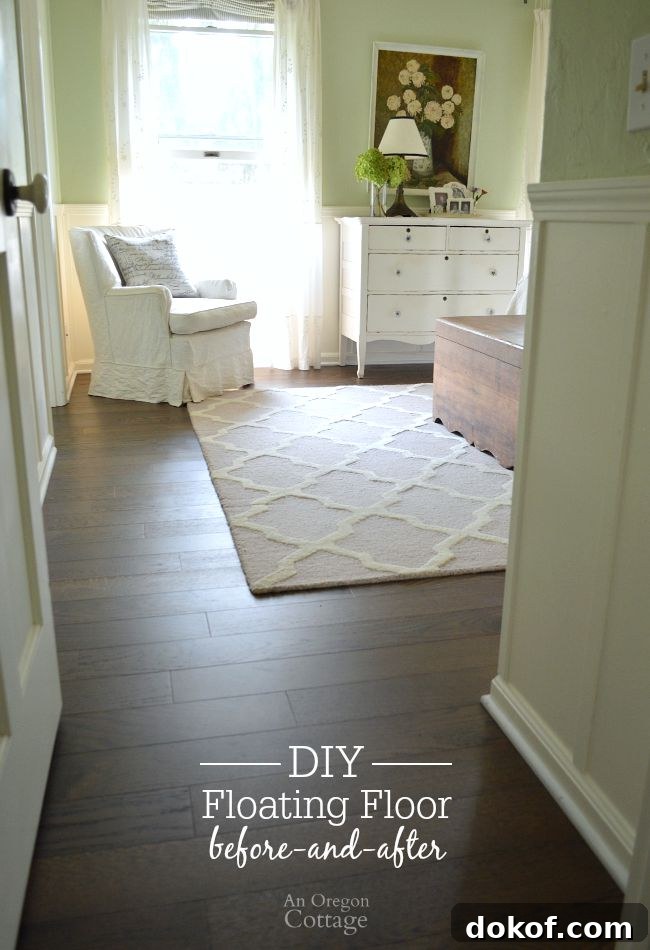
Before and after photos of a DIY floating floor — a simple, affordable update that transforms a room in a single day.
This post was part of a sponsored campaign. Compensation was received. All opinions are my own.
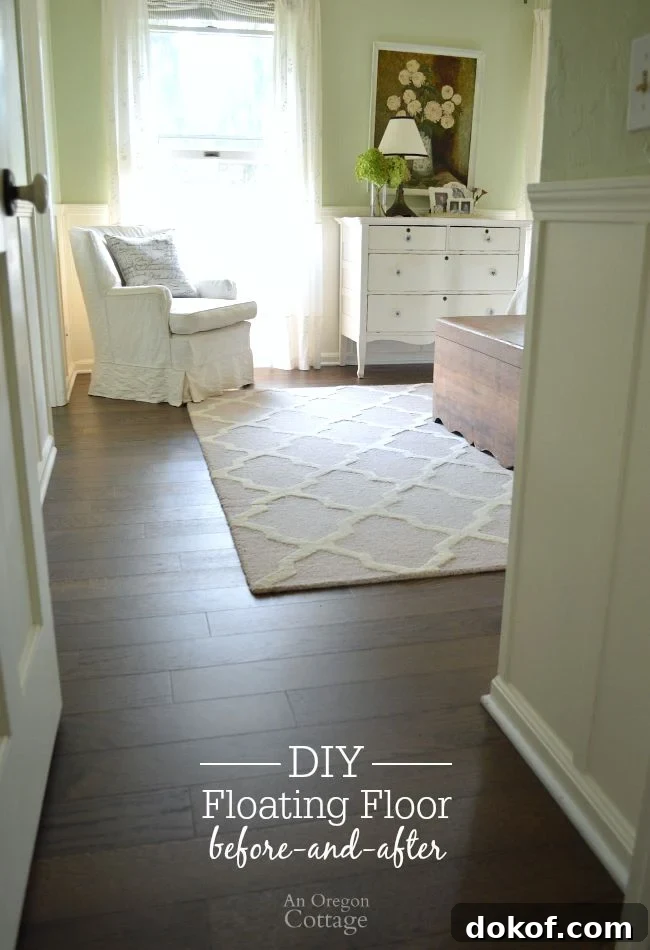
Ready for a before-and-after reveal? After sharing our tips for laying a floating floor, here’s the finished result. We spent one Saturday installing an engineered floating hardwood floor in our master bedroom, checked another item off our home improvement list, and are thrilled with the change. Installing a DIY floating floor is quick, affordable, and one of the easiest ways to update a room — especially since prefinished planks eliminate lengthy drying or curing times that often add days to a flooring project.
We’ve tackled many flooring approaches over the years — painting plywood, laying and staining plywood, applying brown paper with polyurethane, installing reclaimed wood, tiling, and floating floors — all to replace carpeting that didn’t suit our style. Based on that experience, I can confidently say floating floors are the simplest DIY flooring option. They’re especially fast when you follow a few practical tips during installation. Floating floors do have trade-offs: they can feel slightly springy underfoot and they can’t be refinished, but for us the advantages far outweigh those drawbacks.
DIY Floating Floor Before and After
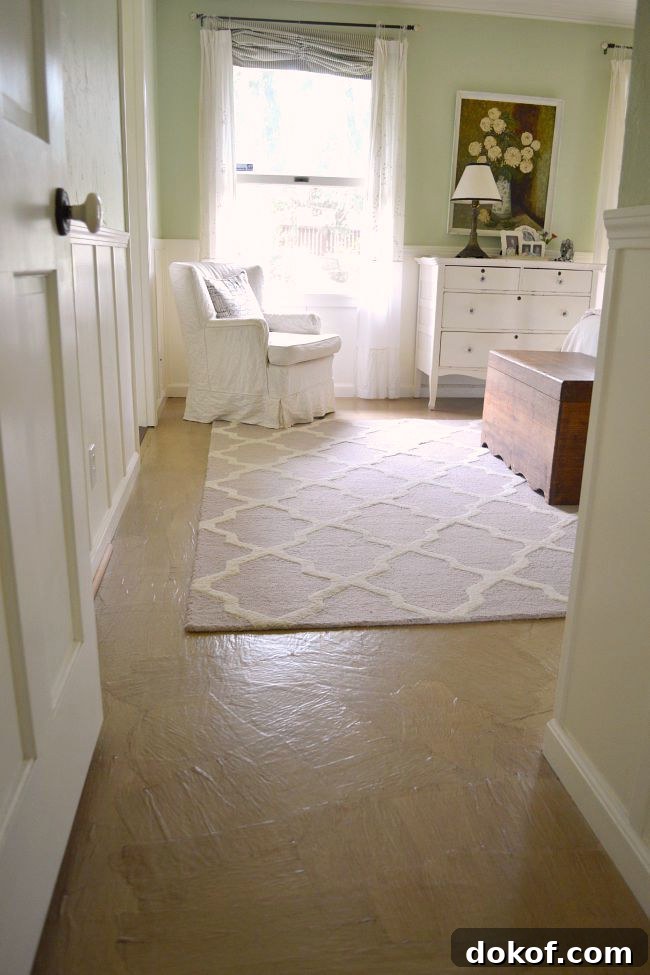
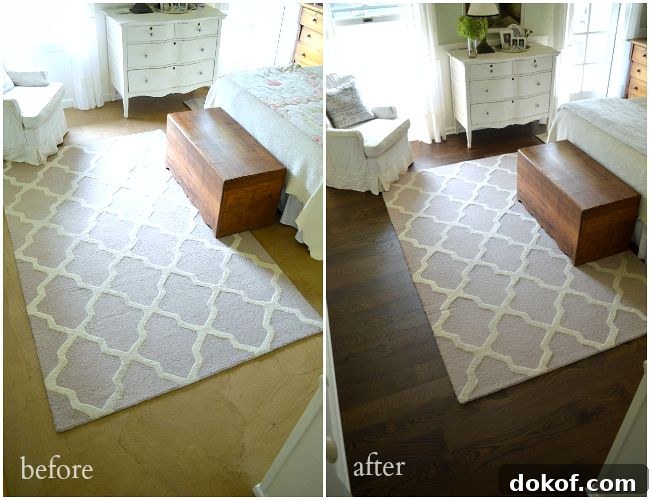
This is how our master bedroom looked for several years after removing the carpet and trying a brown paper floor treatment that didn’t turn out as expected. I had successfully used the brown paper technique in the past, but this time the paper was a different weight and the textured finish I usually achieved never developed. The result looked like paper glued to the subfloor rather than a faux-leather, textured surface.
To illustrate the difference, here’s a side-by-side comparison of a kid’s room where the paper floor worked well and our bedroom where it didn’t:
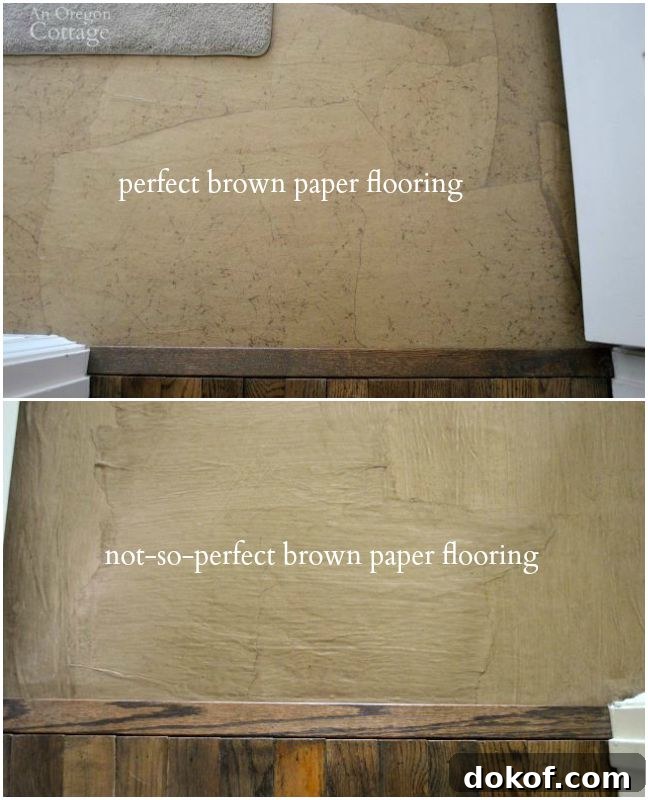
Part of the brown paper technique involves tearing the paper into shapes and crumpling it before gluing it down to create texture. When the paper is too thick that effect disappears. I tried to salvage the floor by tinting the topcoat, and while it improved the look slightly, it wasn’t enough. After much time and effort — including redoing a section after a poly selection mistake — we decided to wait and install a new floor.
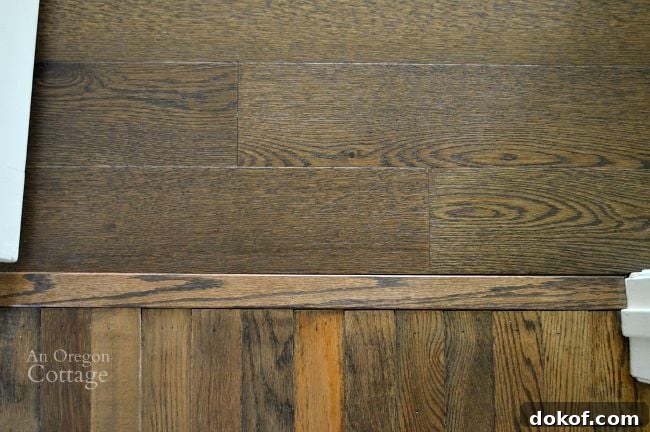
The engineered hardwood transformed the room. One advantage of the brown paper approach is that it can remain in place beneath new flooring if it was applied over the subfloor, so there was no extra prep work beyond the usual subfloor checks.
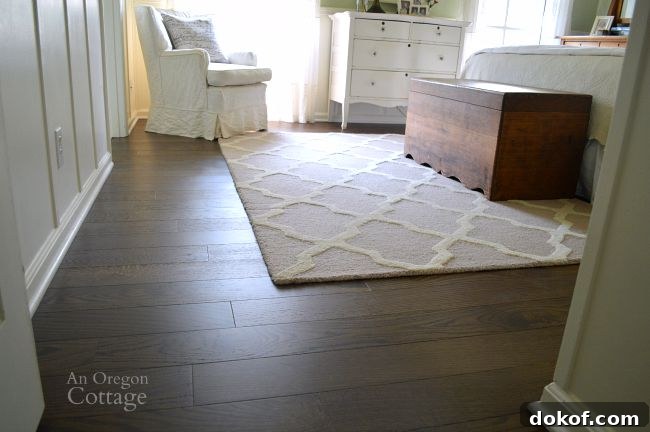
I was initially concerned about our board-and-batten wall treatment. Removing the baseboard would have meant dismantling the battens, which wasn’t an option. Because engineered hardwood is only about 5/16″ to 3/8″ thick, the height difference was minimal. Adding painted quarter-round shoe molding finished the edge so it blends seamlessly with the existing trim.
We selected a darker stain to coordinate with other flooring in the house. The contrast with lighter walls and furnishings creates a rich, elegant look. Yes, darker floors can show dust more readily, but the aesthetic payoff made it worthwhile for us.
DIY flooring projects always involve a lot of bending, lifting, and moving furniture, so muscle soreness is common after a full day of work. We keep pain relief on hand for that reason and found it helpful during the aftermath of this installation.
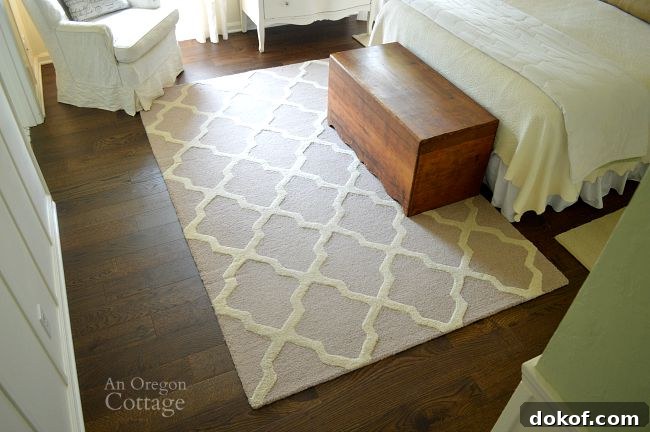
The change is dramatic for relatively little effort. I was pleased to find engineered flooring on sale that looked authentic and avoided the overly ridged, artificial appearance some products have. This selection strikes the right balance between natural wood appearance and the convenience of engineered planks.
Budget Breakdown:
- 180 square feet of engineered hardwood flooring at $2.49/sq. ft.: $456
- Foam underlayment padding (2 rolls): $50
- 2 bottles wood floor glue: $16
- Quarter round molding: $25
- Threshold pieces: used from existing materials
- TOTAL: $546
(Paint used: ‘Creamy White’ by Behr)
Disclosure: Product and/or compensation were provided for this post. The opinions and project details are my own, and I only recommend products I genuinely like and believe will be helpful.